

VALHALLA ODISSEY
[Competition]
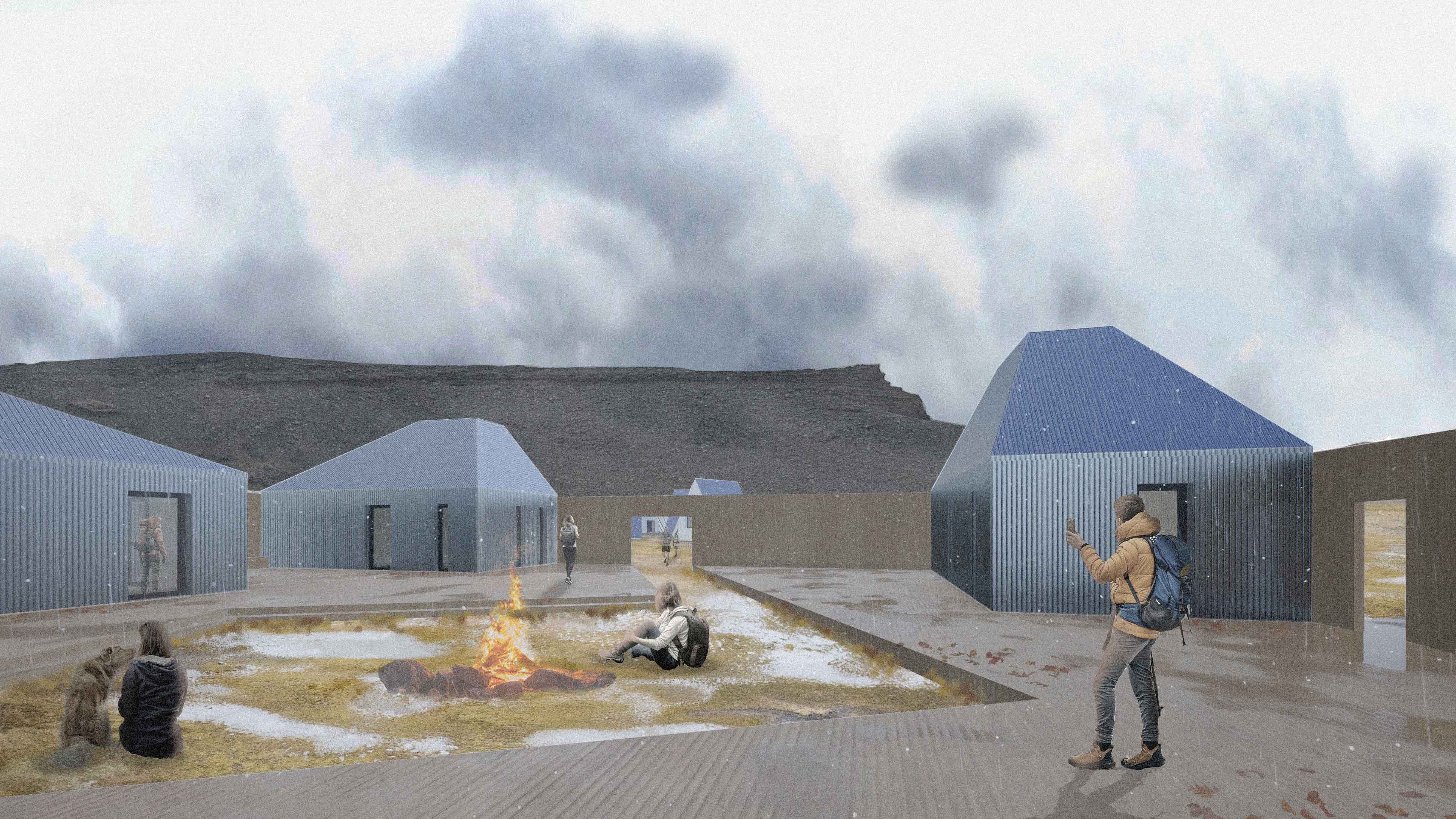
The project proposes a reconnection between the desolation of the primordial world and the characteristics of the encampment through what best conveys the domestic sentiment: the hearth. This intention materializes in the creation of a welcoming stronghold for those who choose to embark on a journey through the poignant Icelandic landscapes, accompanied by its authentic protagonists.
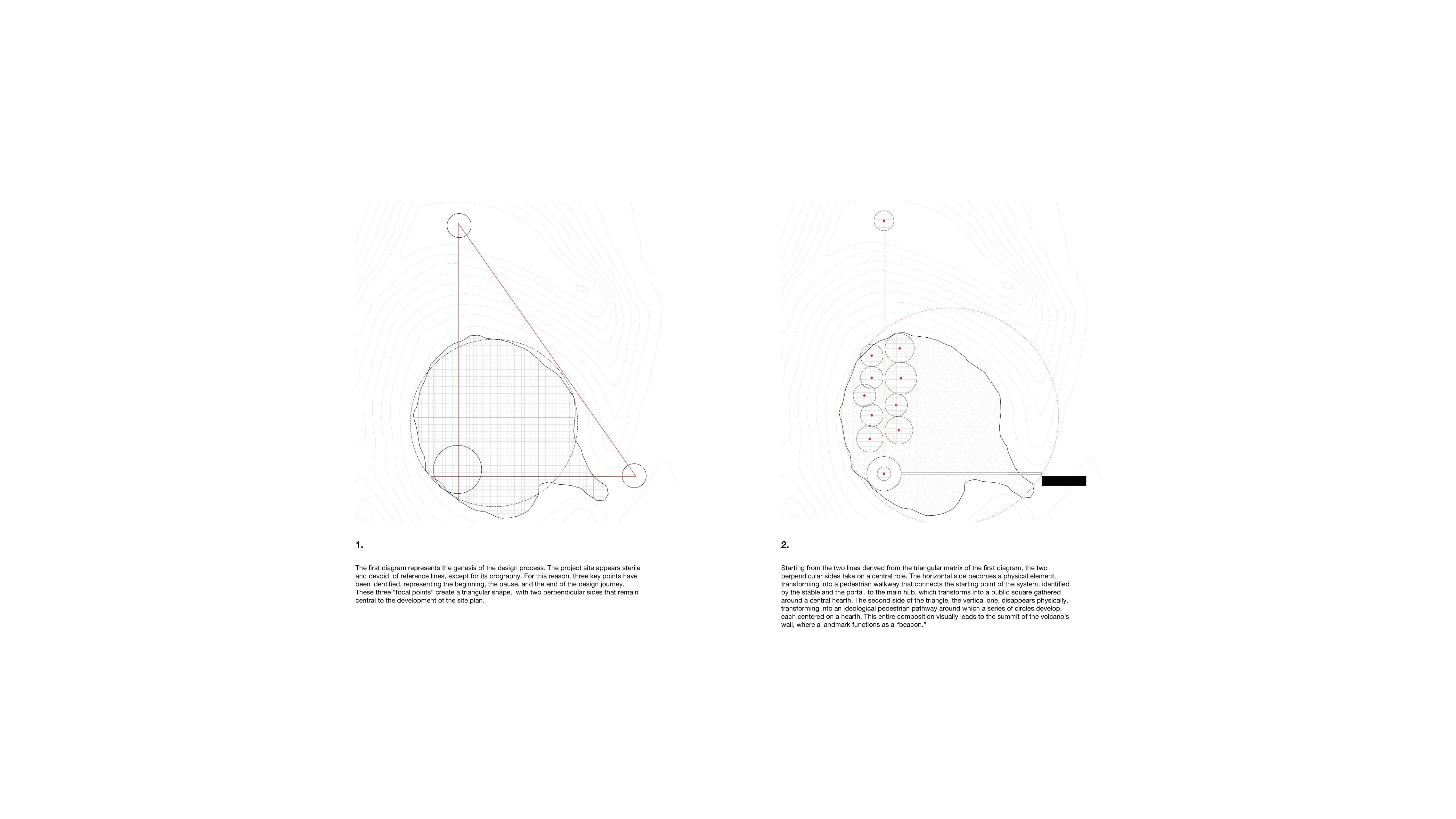
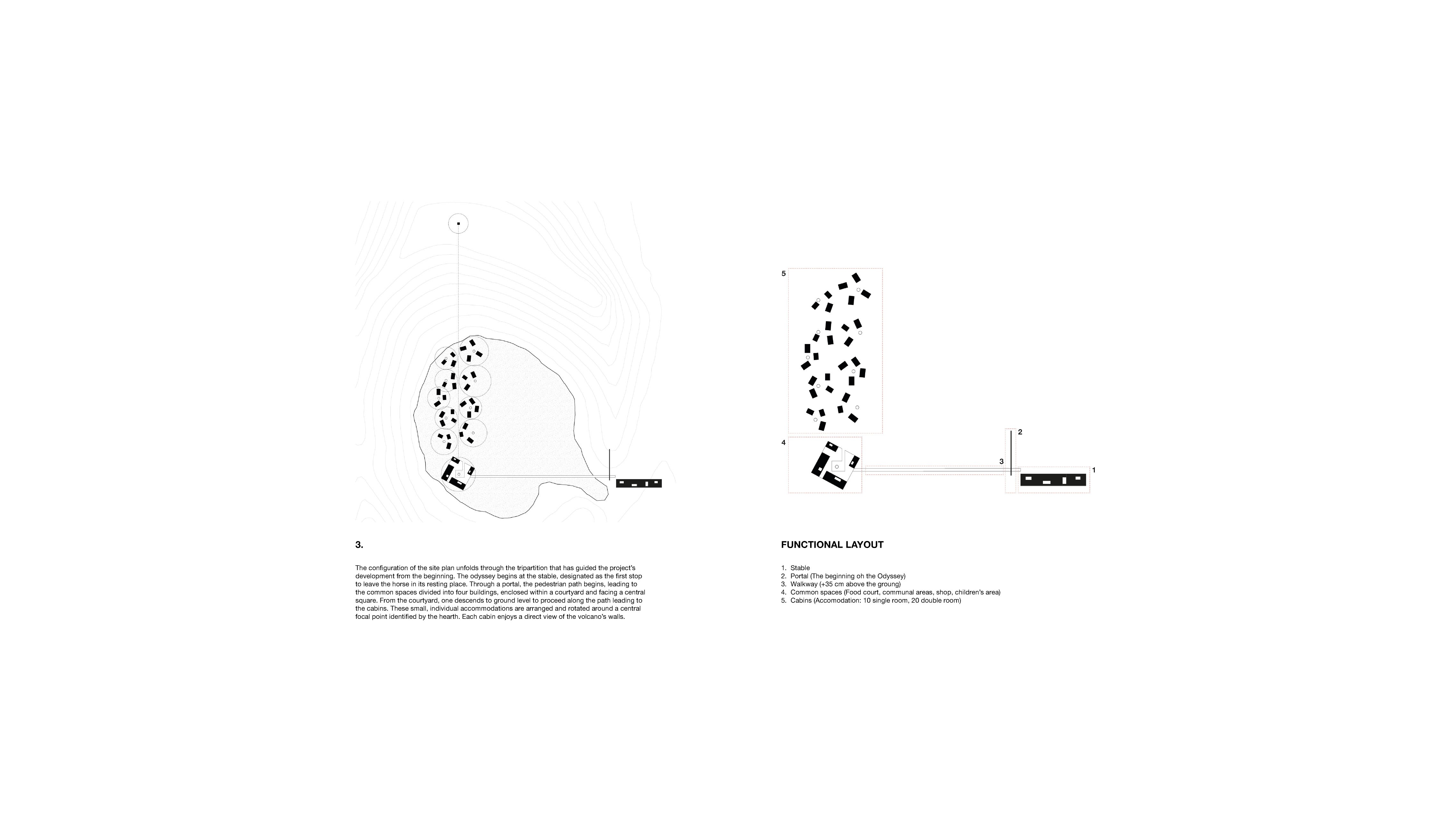
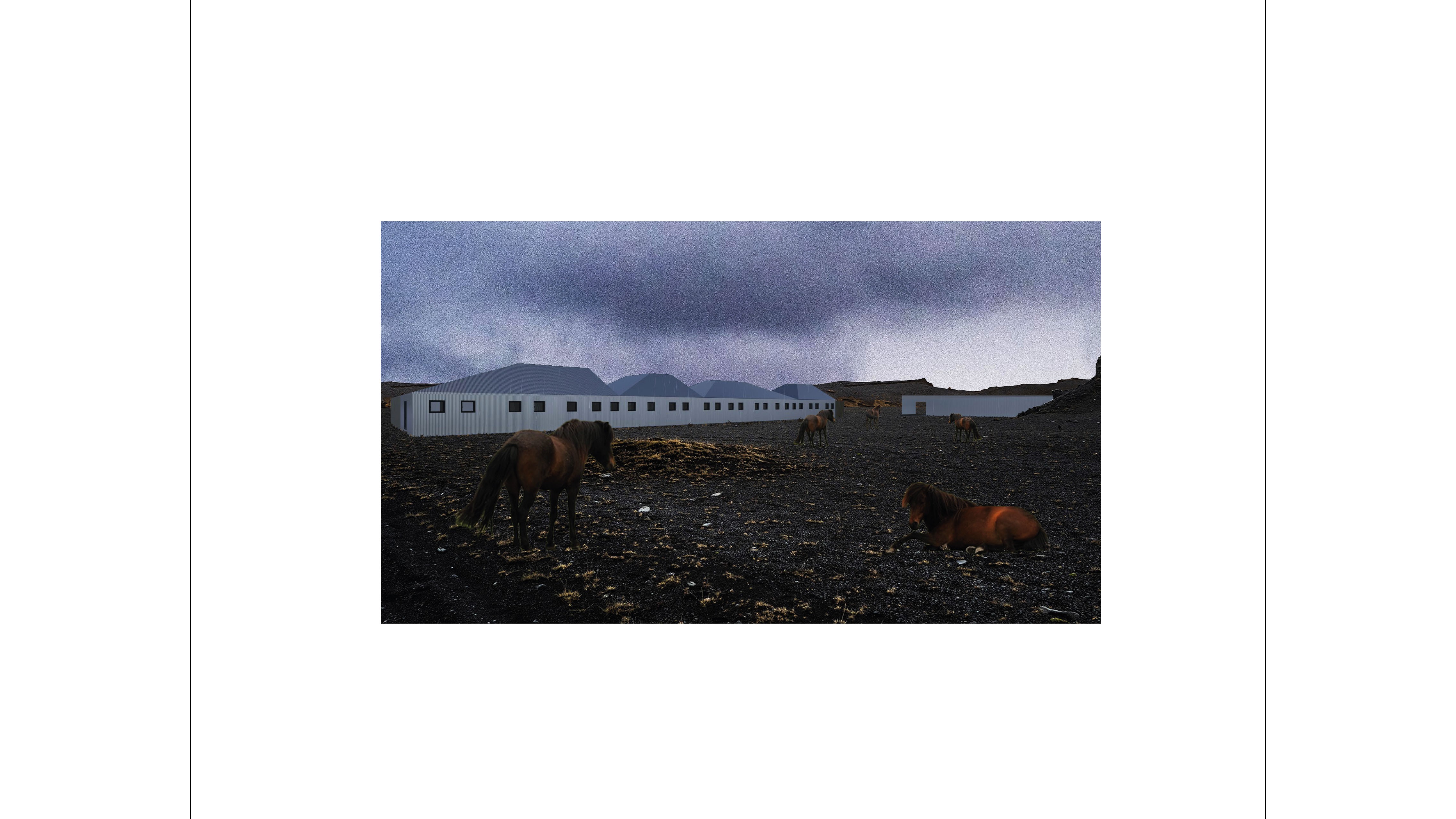
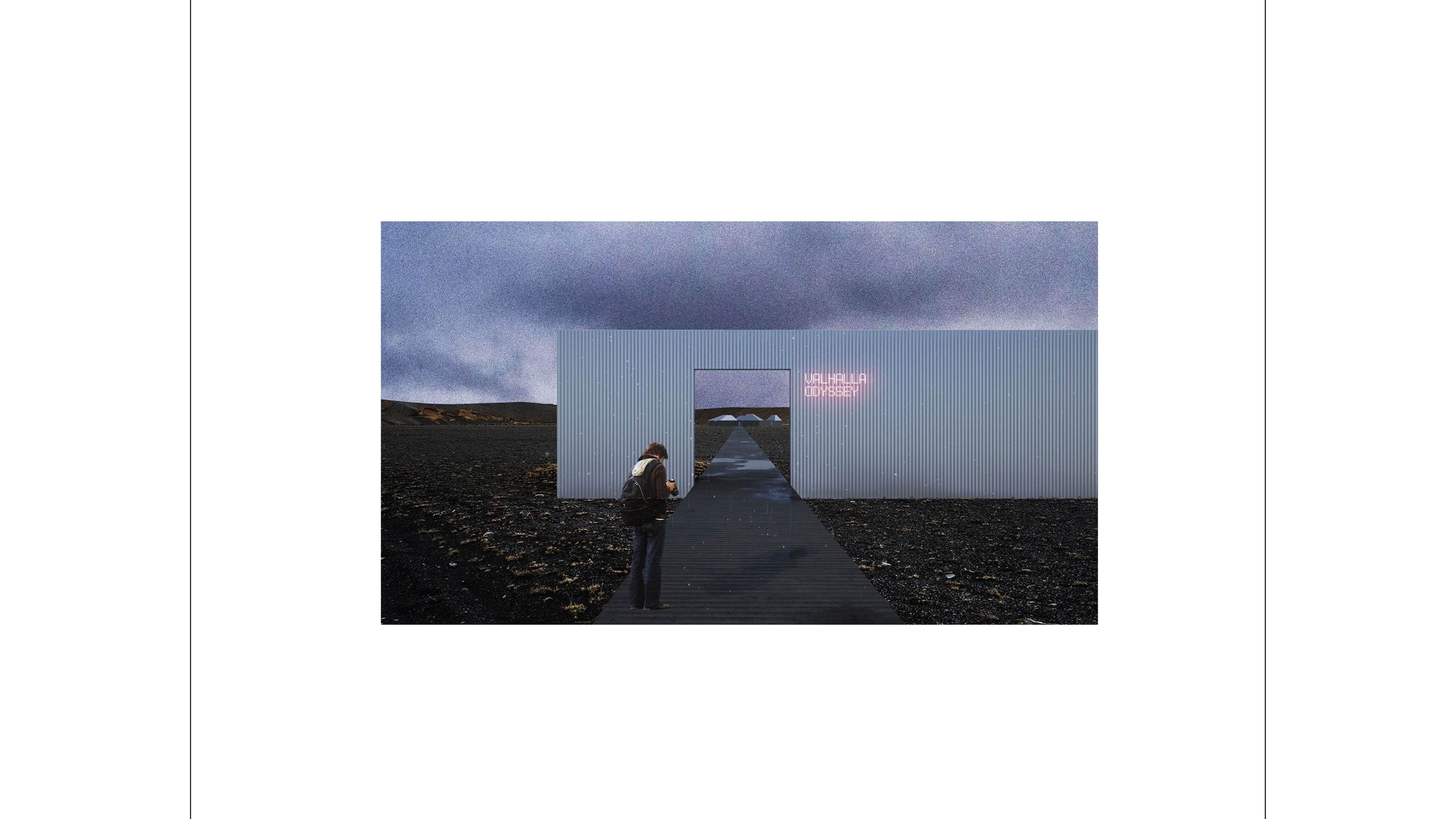
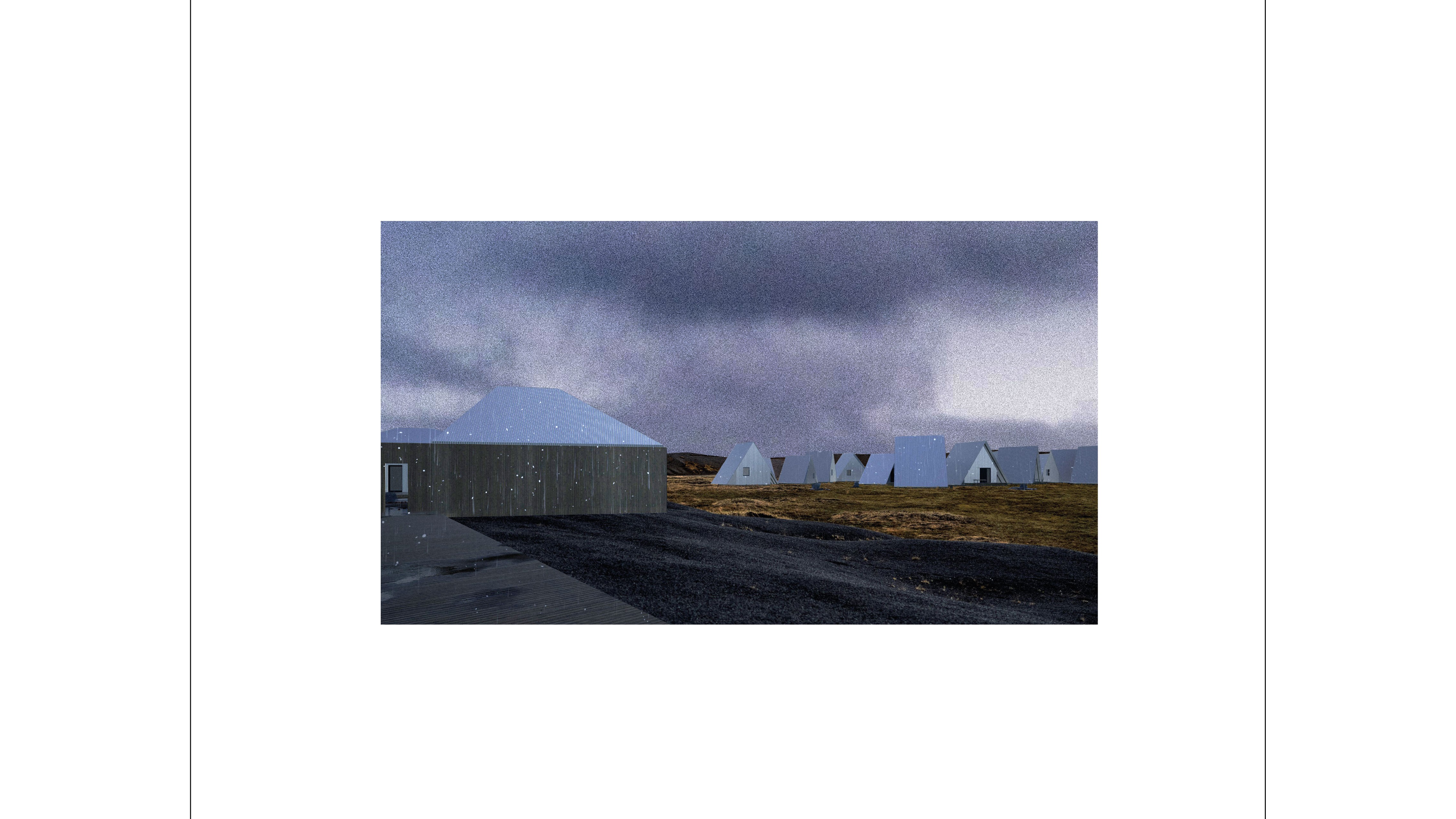
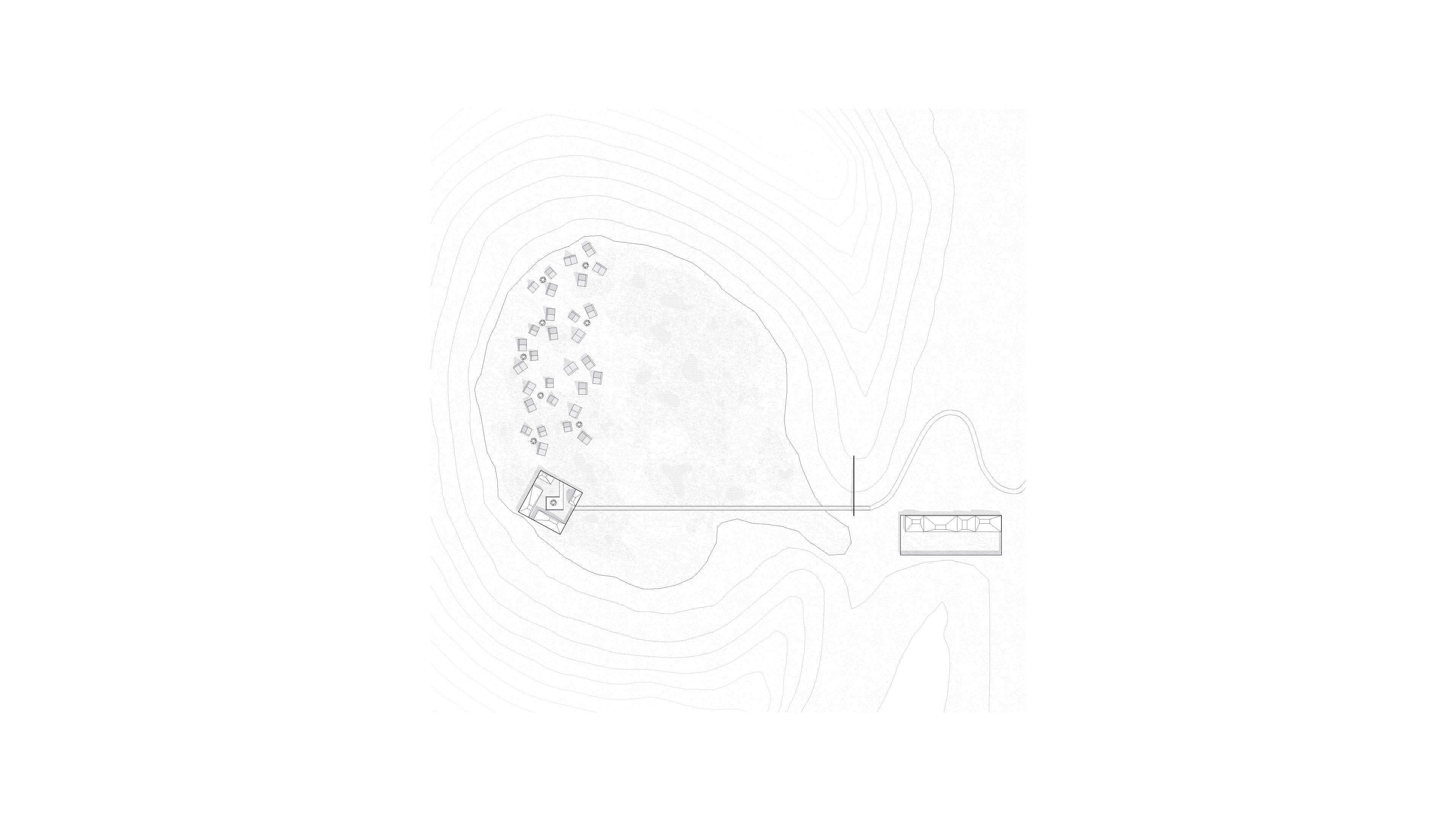
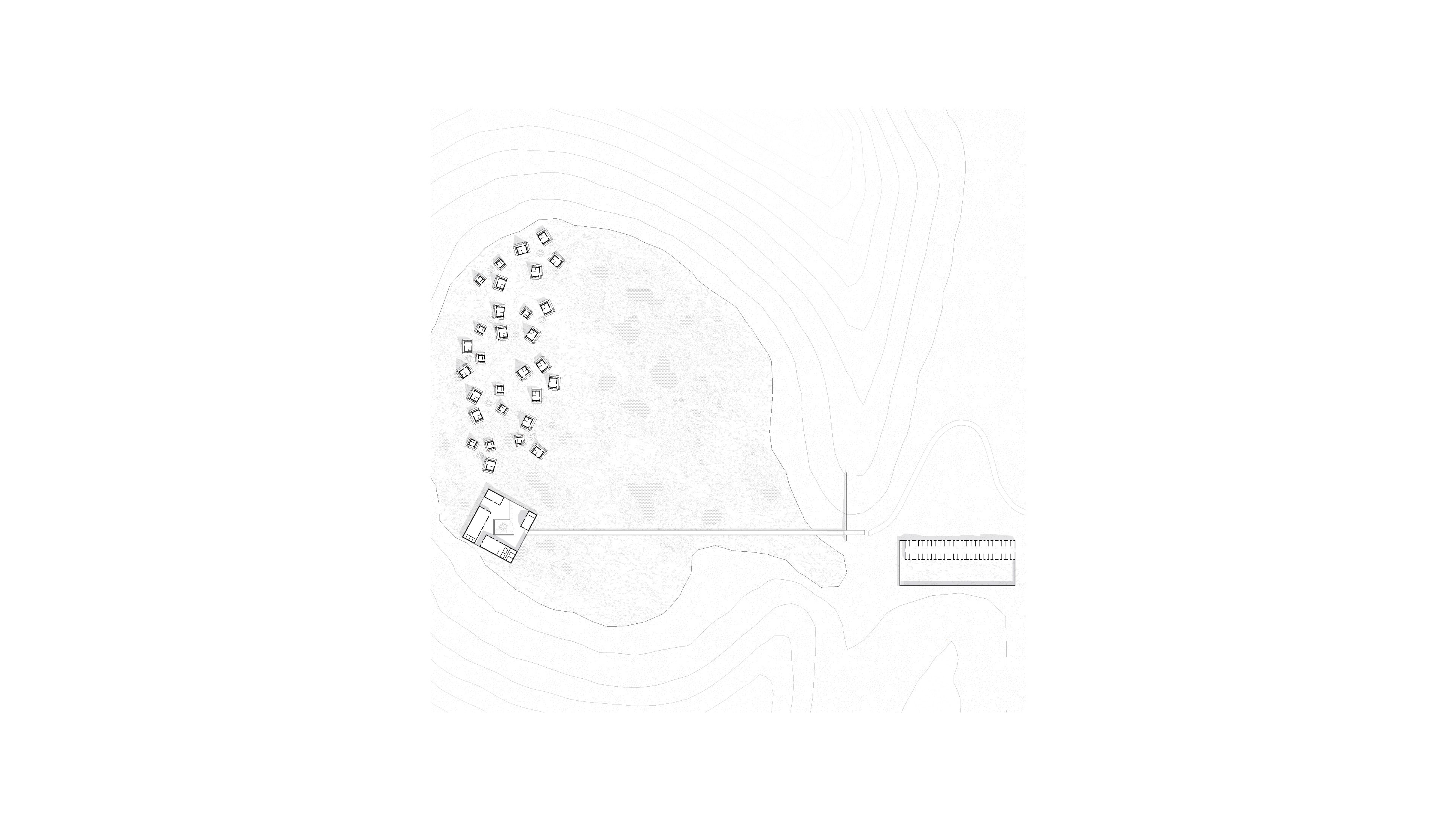
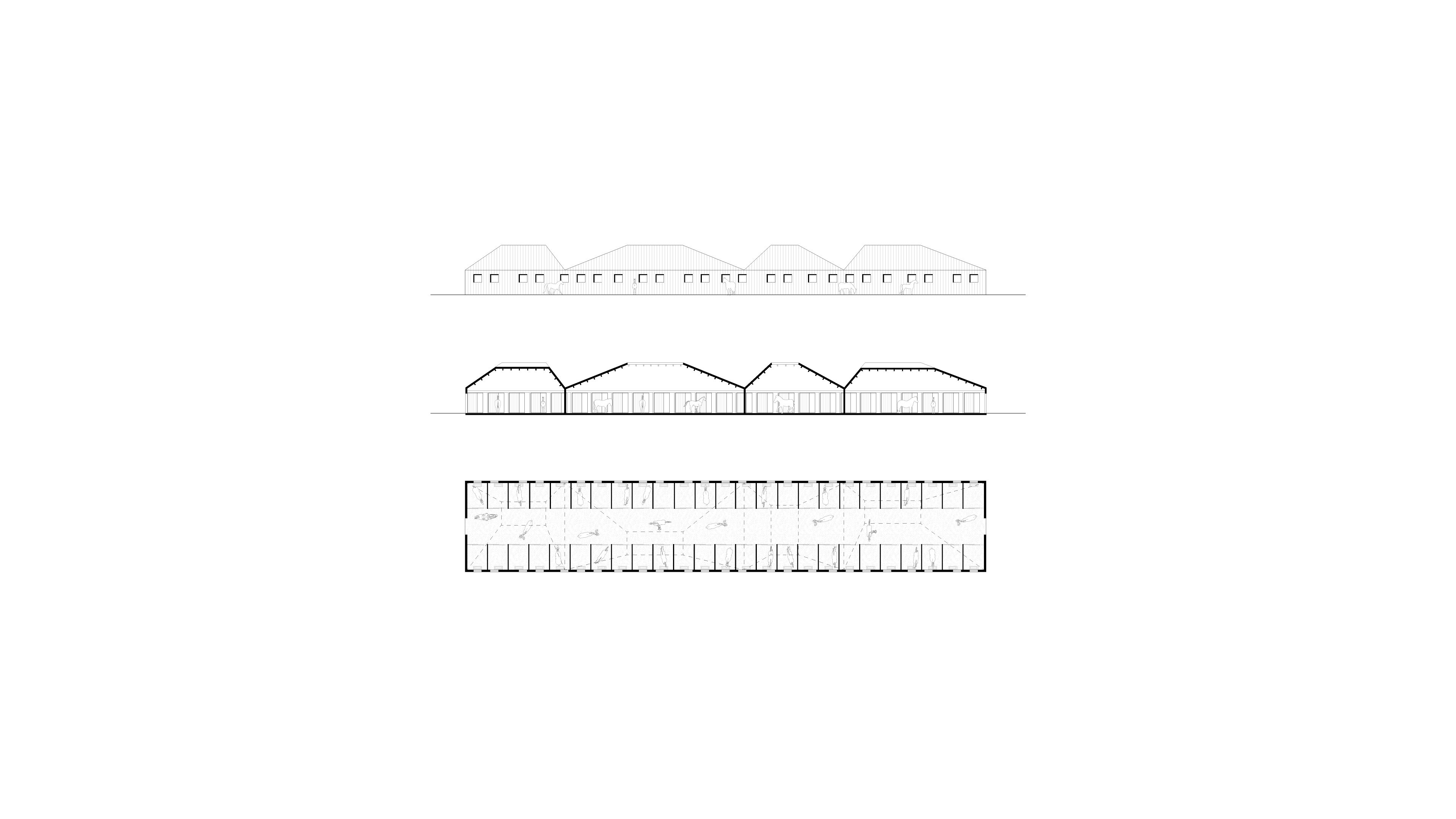
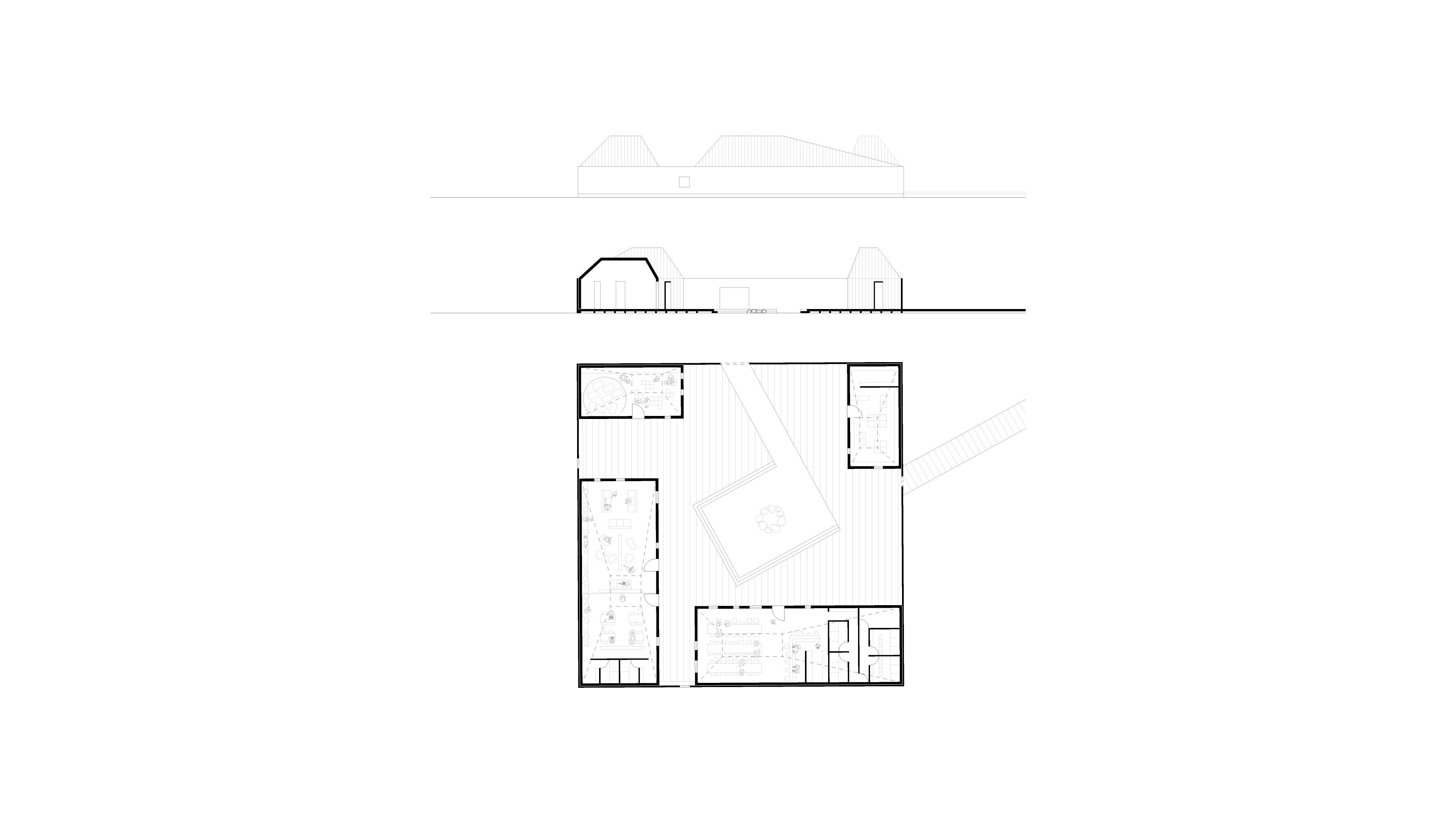
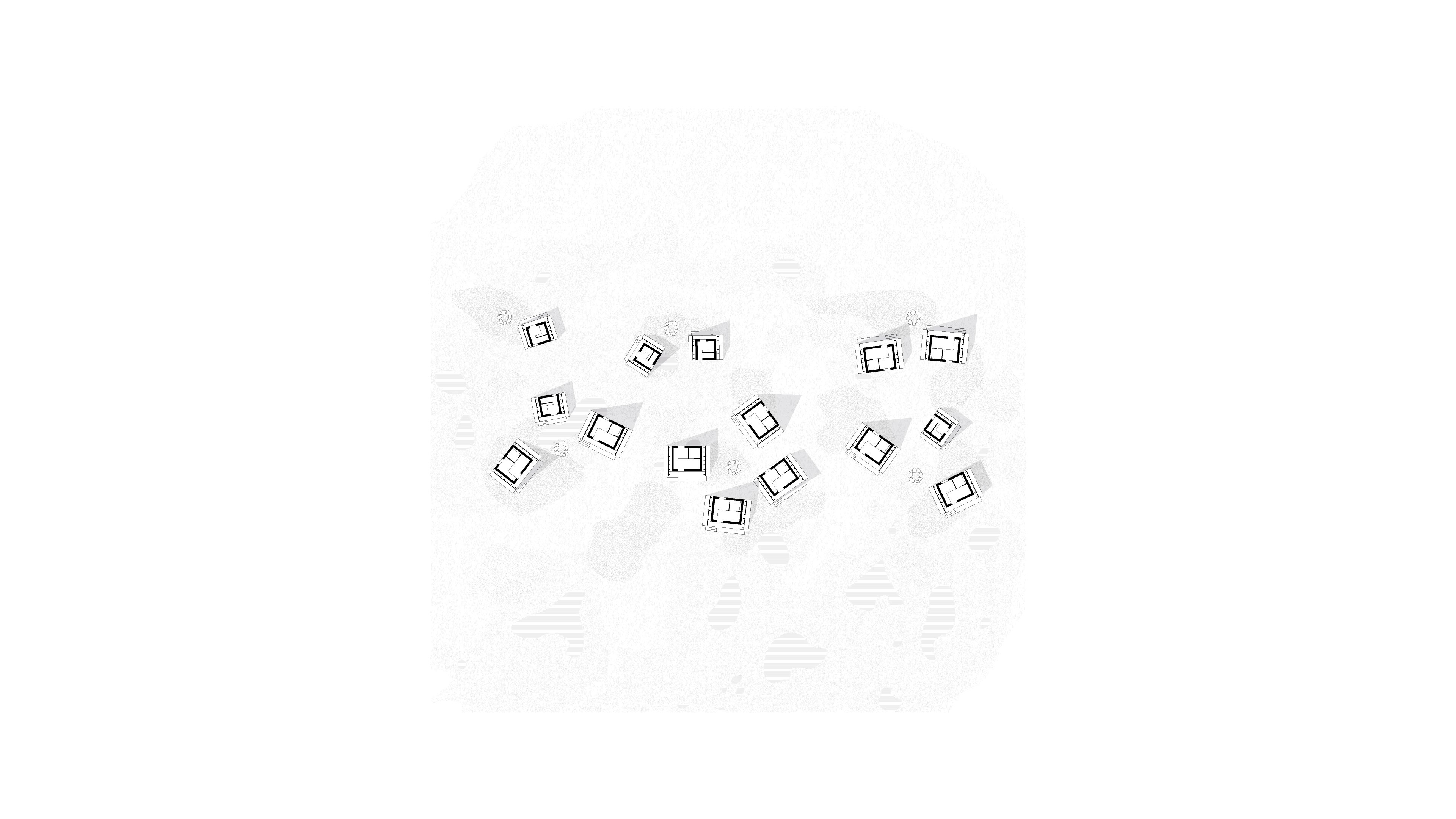
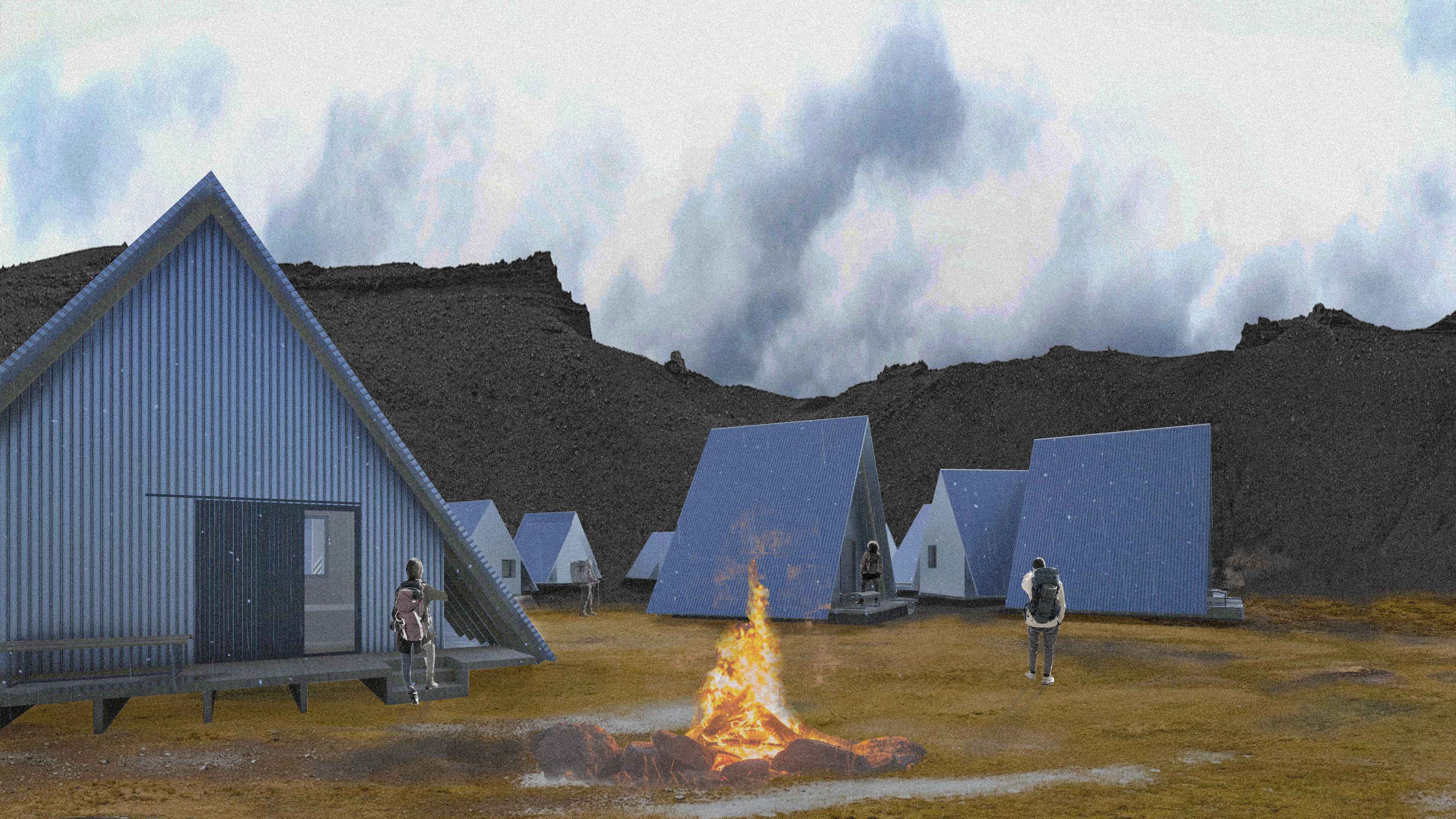
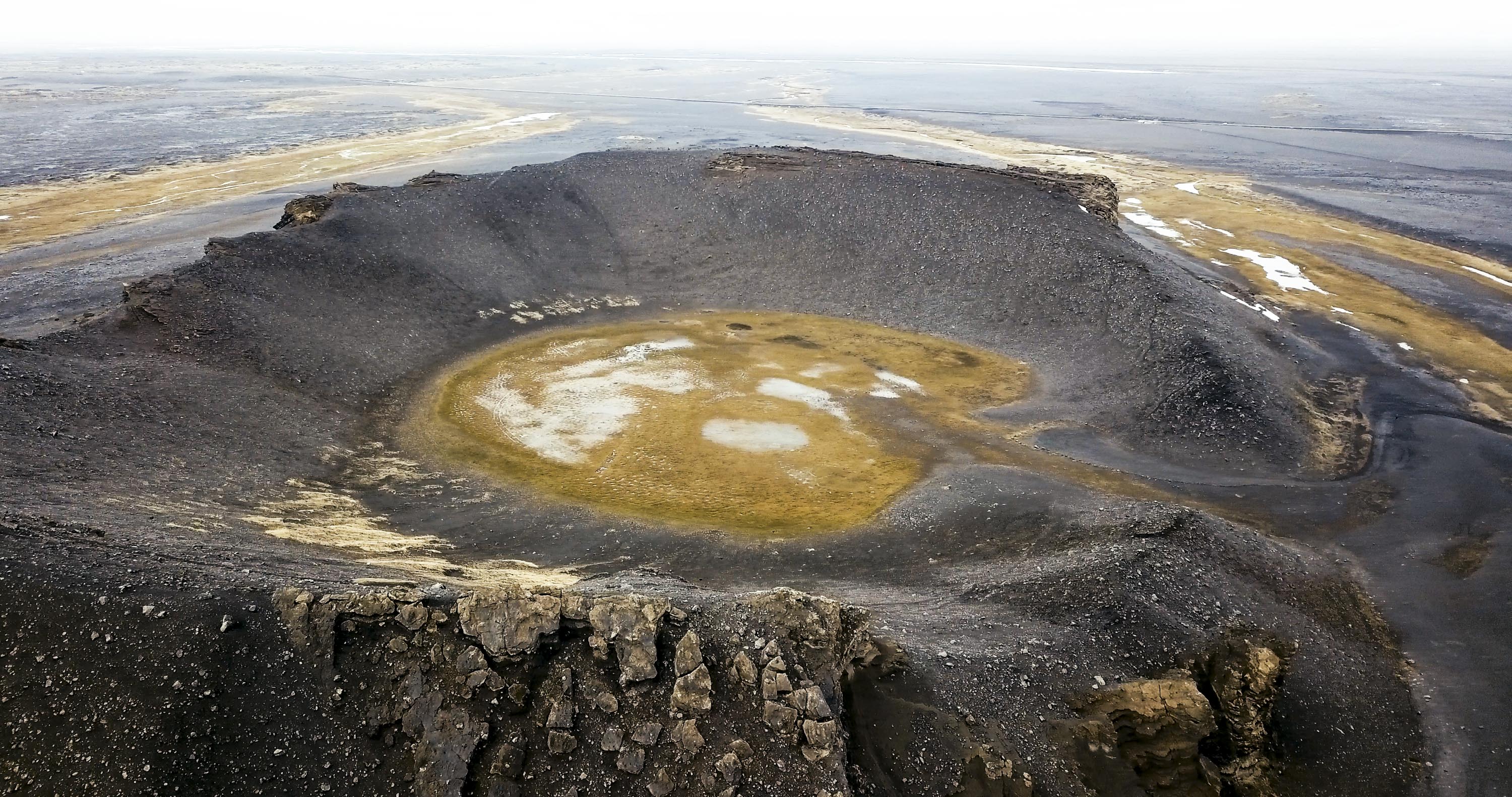
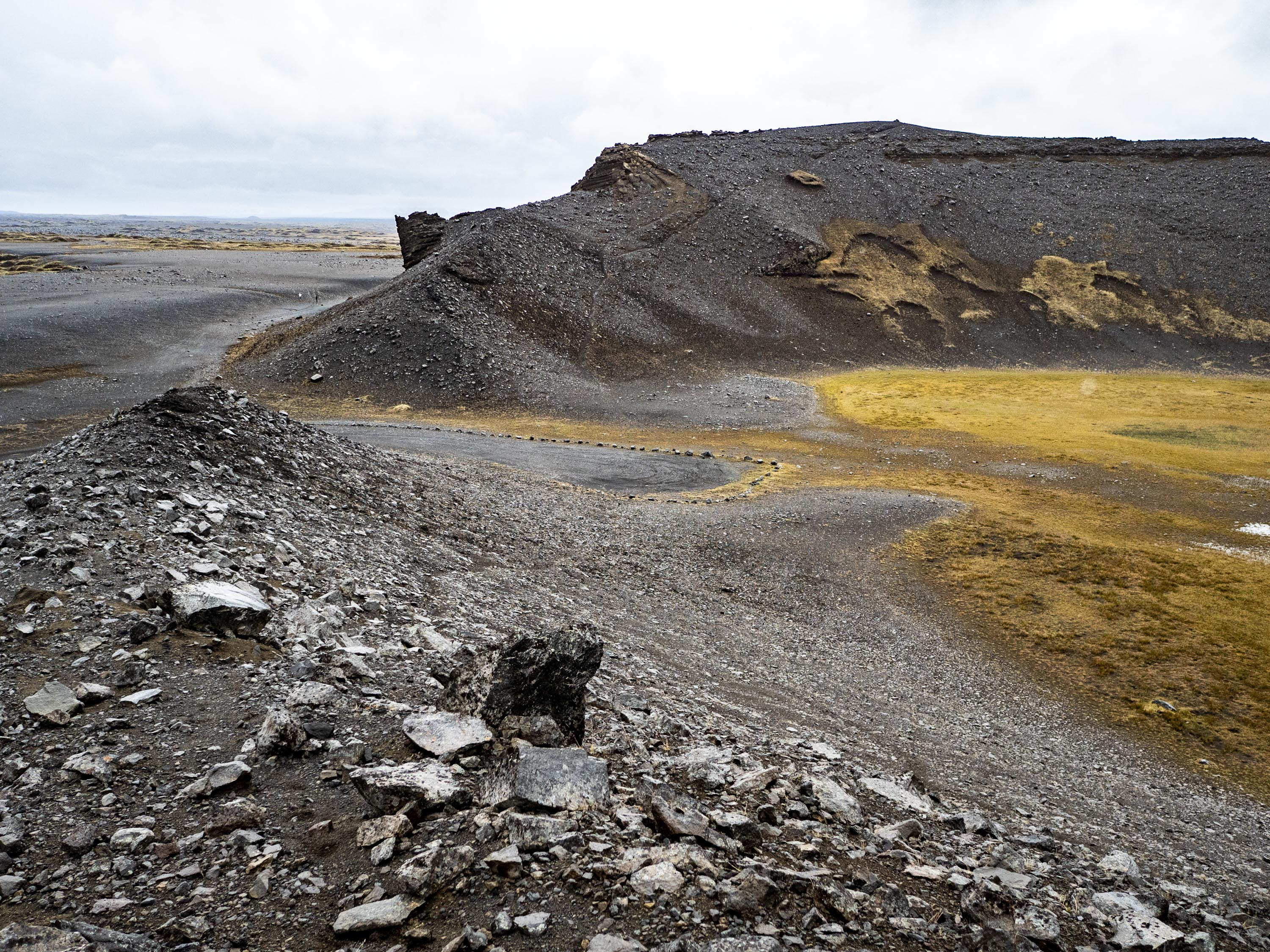
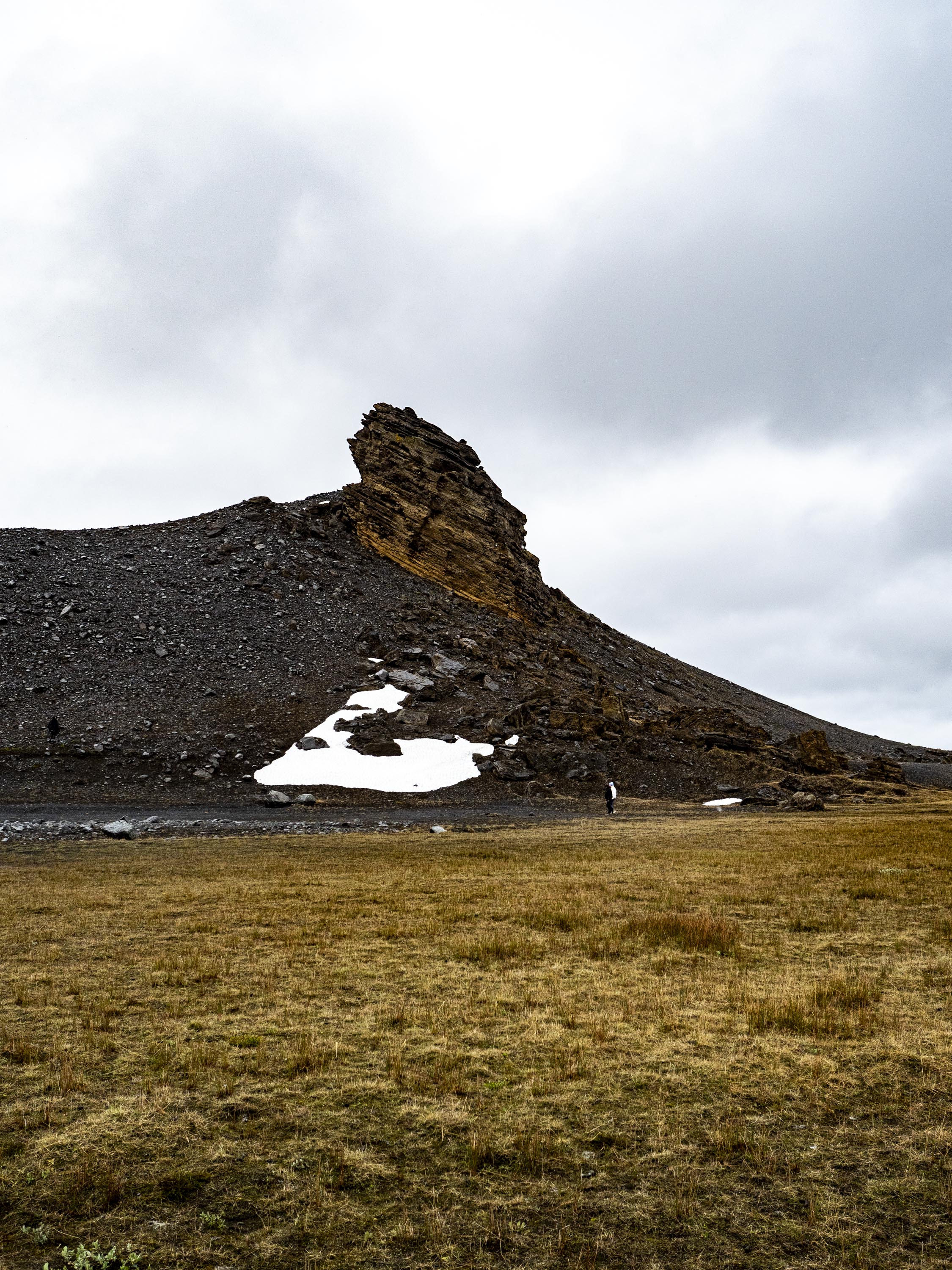
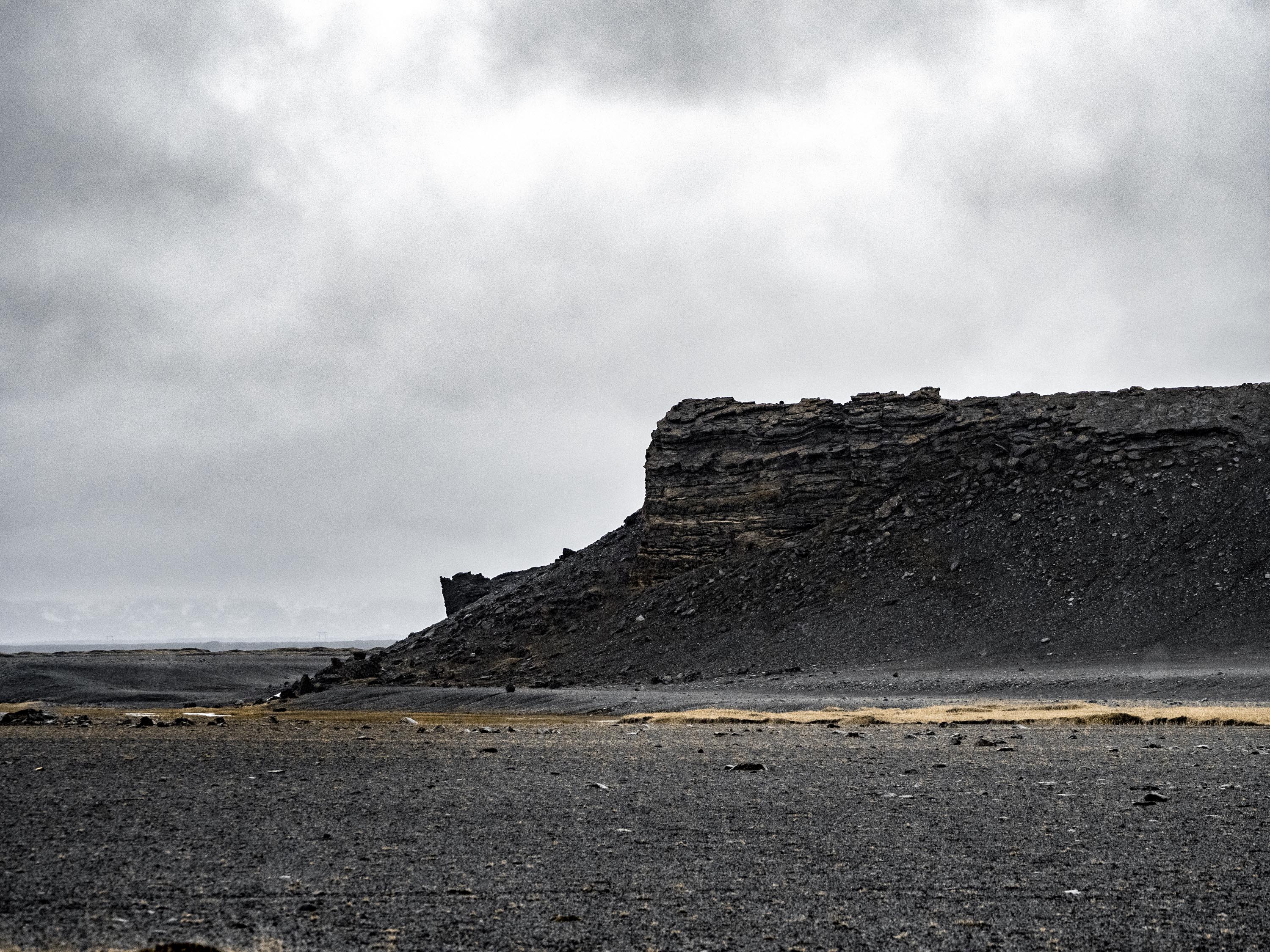
The objective is to mediate the relationship between the vast open spaces and the protected environment of Hrossaborg, guiding travelers along a path marked by an increasingly intimate character. The large stable is the first architectural element visible from the outside, positioned near the crater’s threshold, allowing the pilgrim to orient themselves within the vast landscape towards the heart of the volcano. The theme of the threshold thus assumes great importance, leading to the design of a structure in three phases: the landing, the crossing, and the place of rest. Visitors, after parting with their horses, encounter a true boundary represented by a barrier, aimed at restoring the integral image of the crater and its entrance portal. Upon crossing the threshold, the traveler experiences a change in atmosphere, walking along a catwalk to reach a more sheltered enclosed space containing communal and convivial areas. All spaces face a central courtyard, whose level reconnects with the bare ground through an opening in the floor slab, designed to host a central hearth, which becomes the project’s main gathering place. Hrossaborg thus transforms into a kind of cradle, offering travelers a place of rest and connection. The journey continues externally towards private cabins arranged around a series of smaller hearths, oriented along an ascending path that culminates with a bonfire located at the crater’s crest.
The resulting landscape is characterized by two distinct approaches: the first materializes through two prominent elements (the stable and communal spaces) connected by the walkway; the second consists of a cluster of independent structures. In the first case, the public buildings are expressed through sharp volumes and jagged profiles, with sloped surfaces forming roofs that emerge from a largely solid common base.
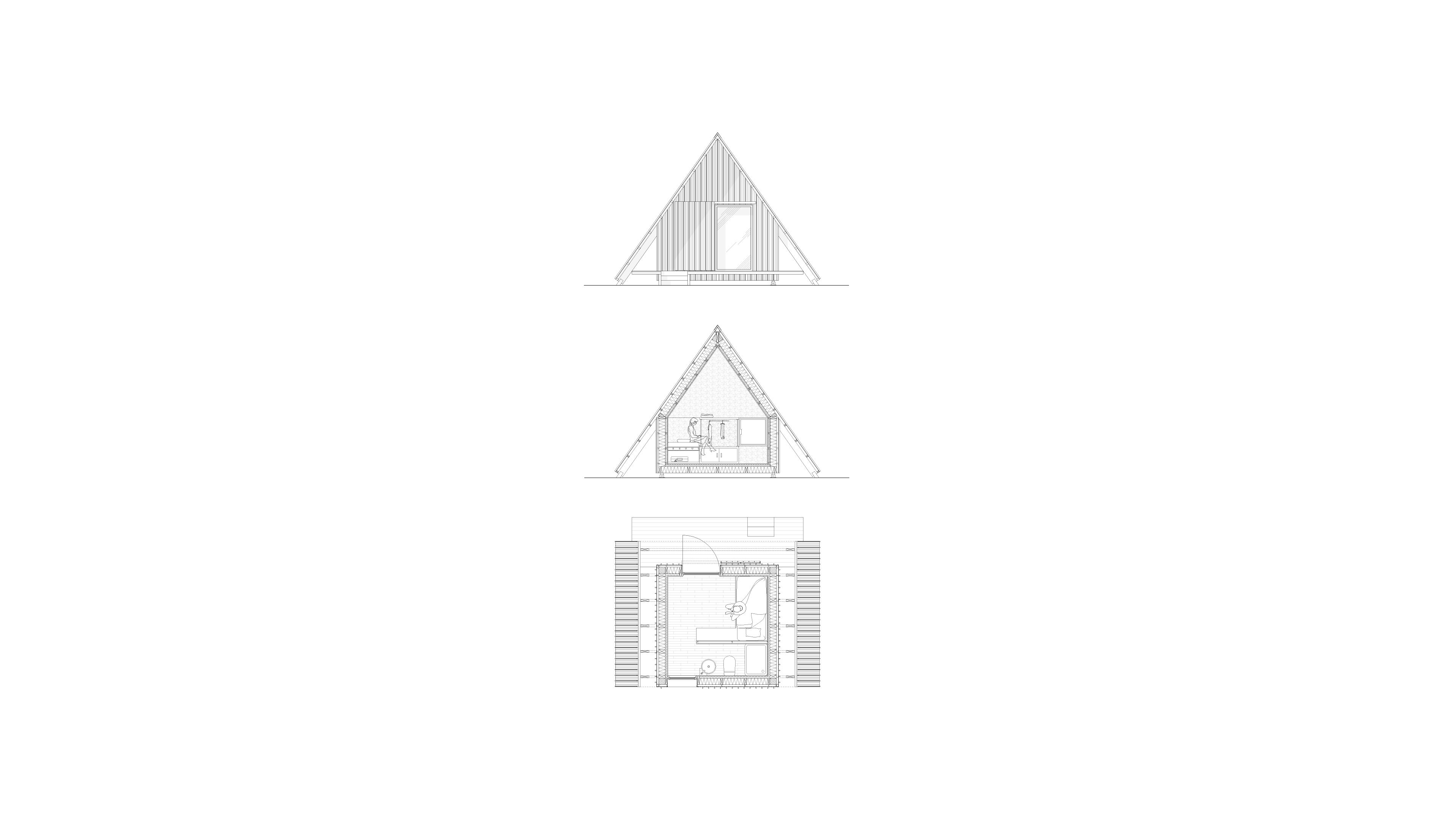
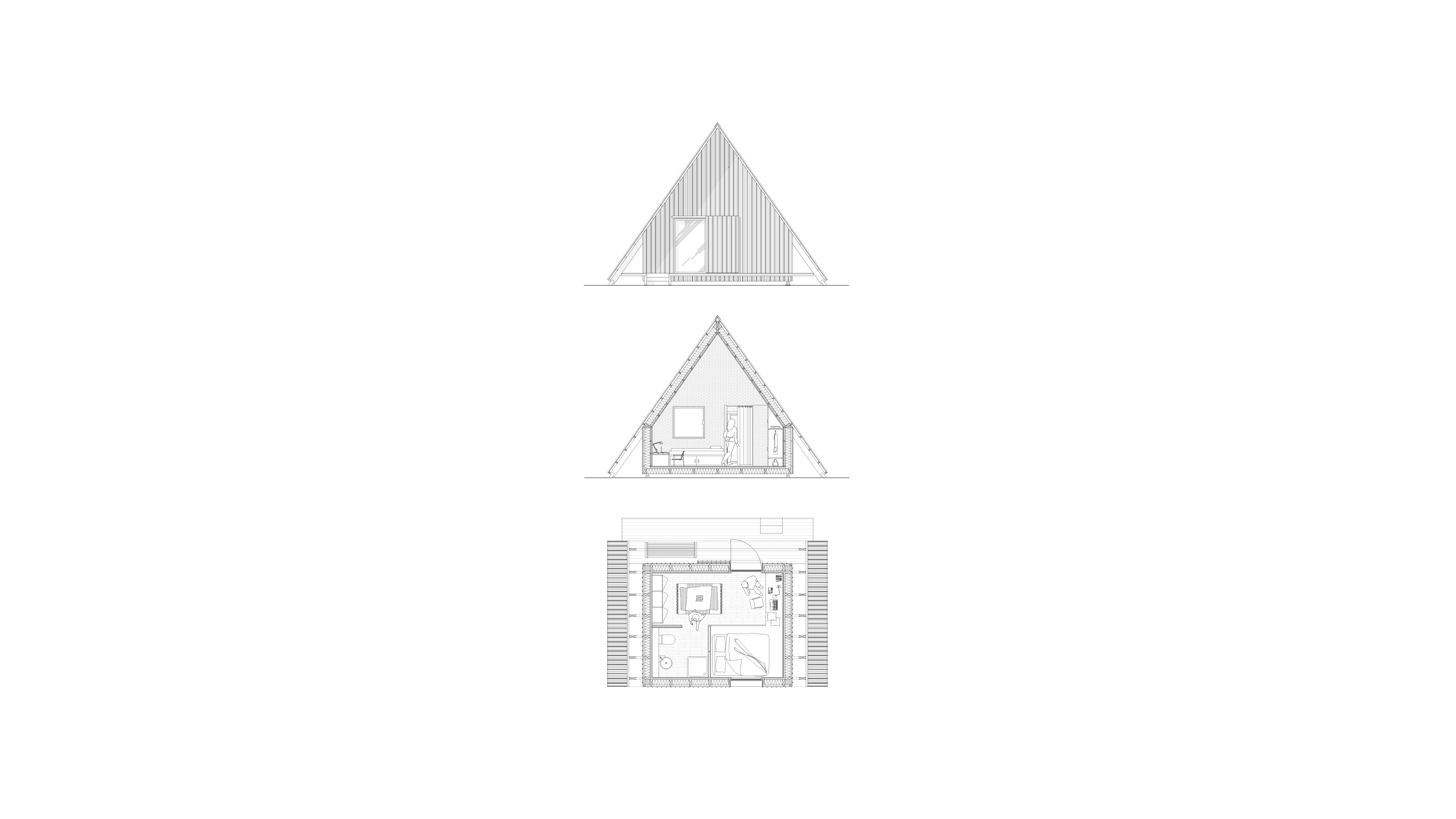
In contrast, the “village” structures simplify to evoke the archetypal image of the hut, distinguishing them from the more convivial buildings.