TRENTASETTANTA
[Competition]
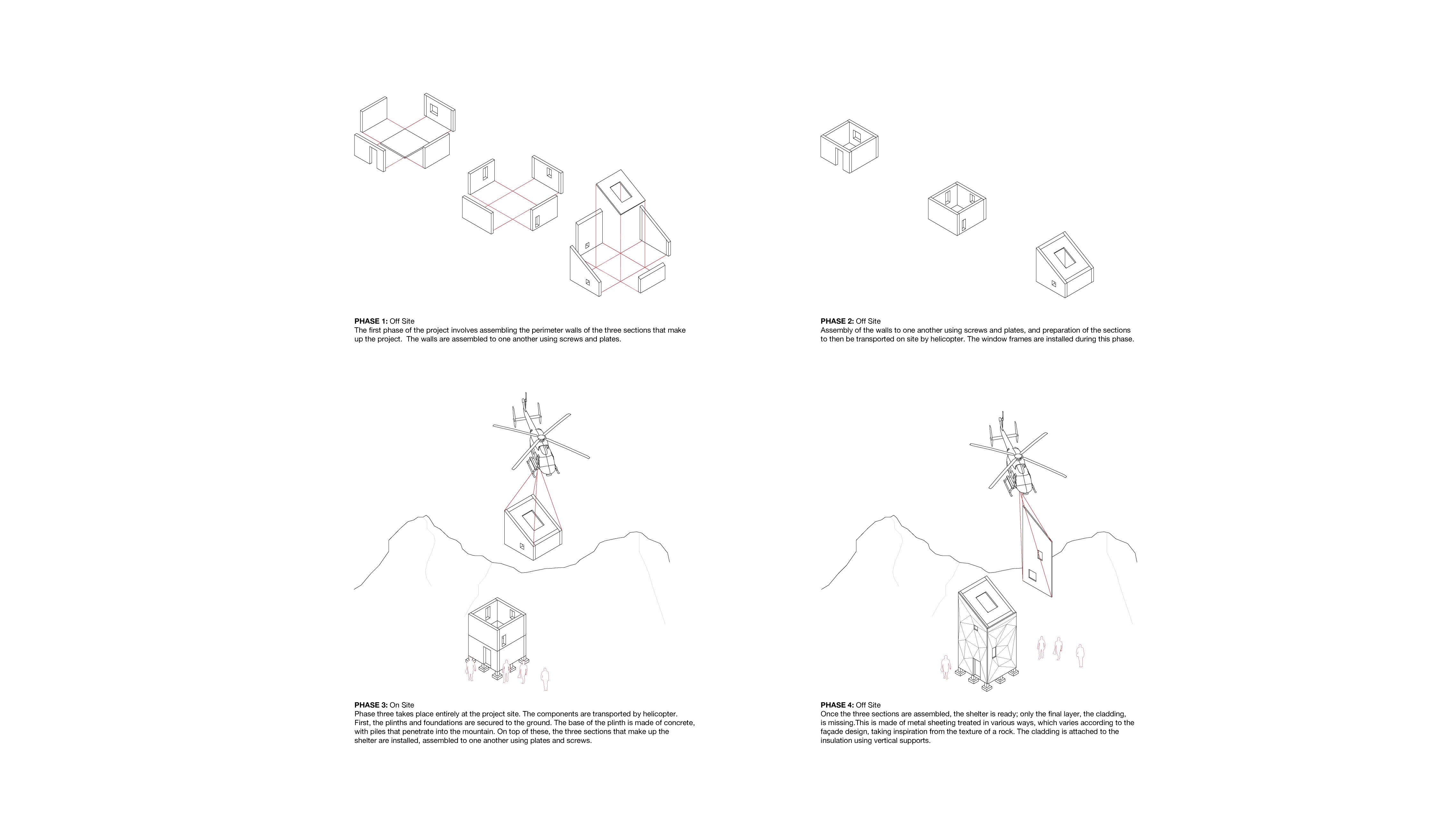
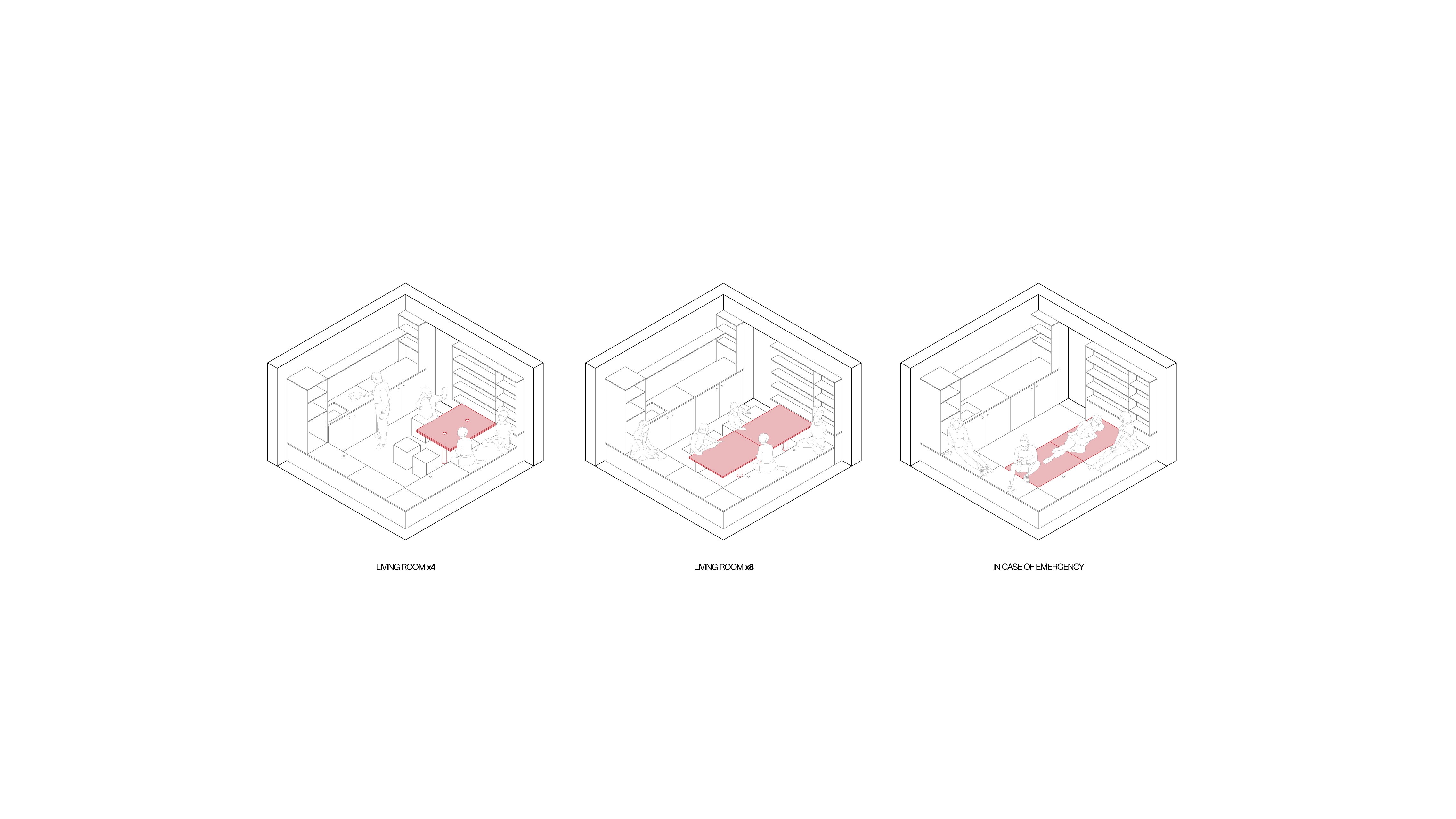
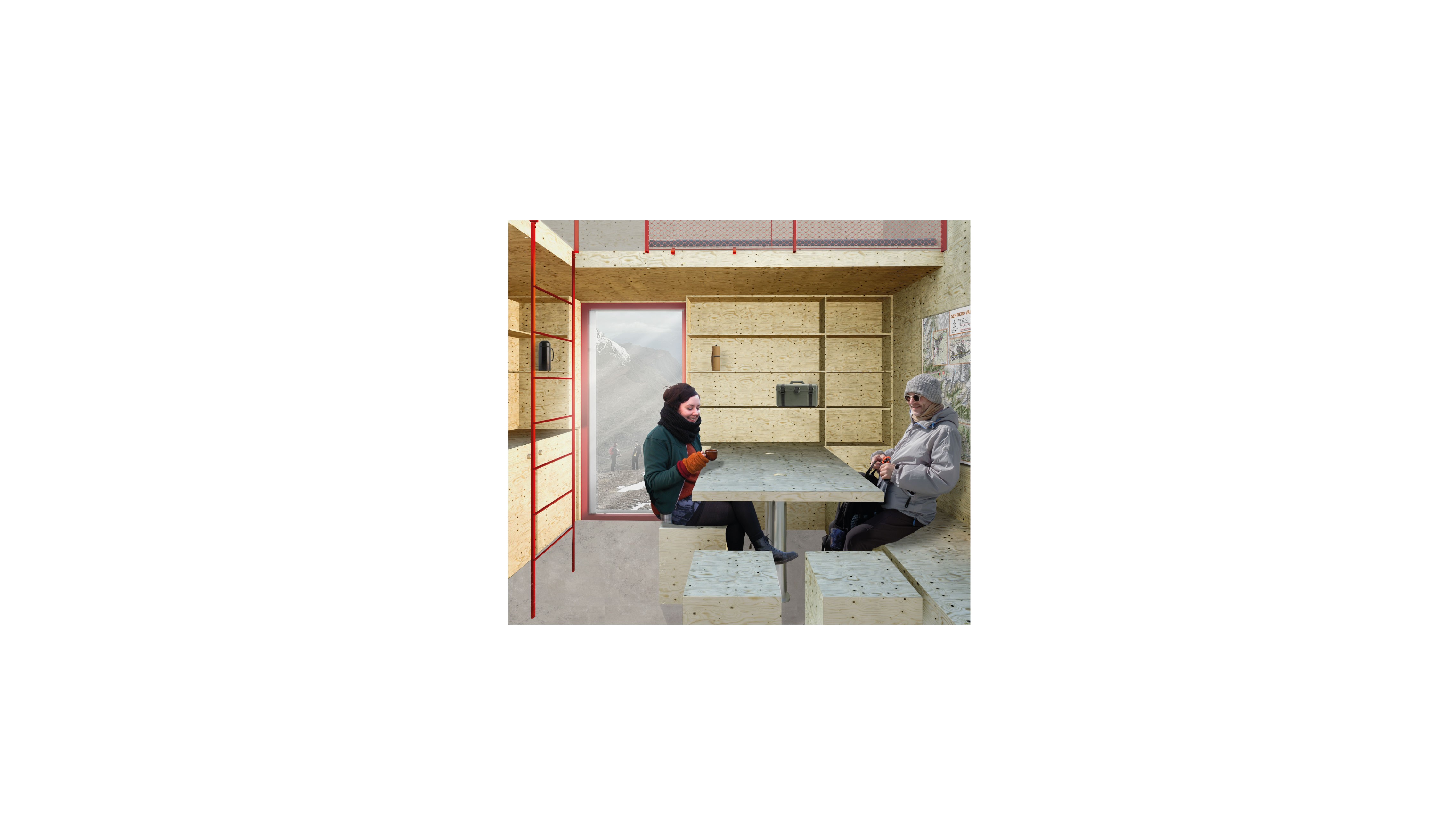
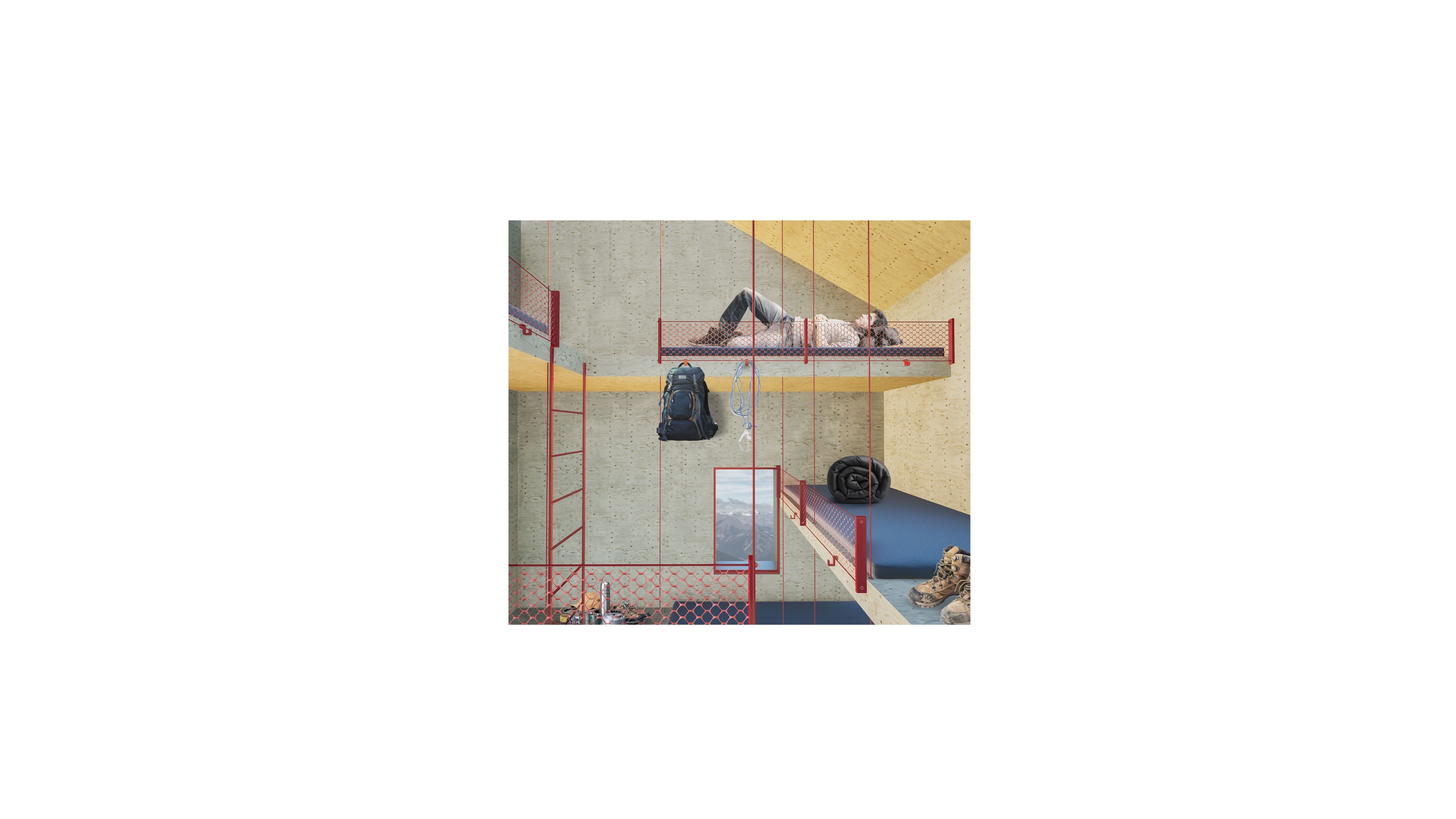
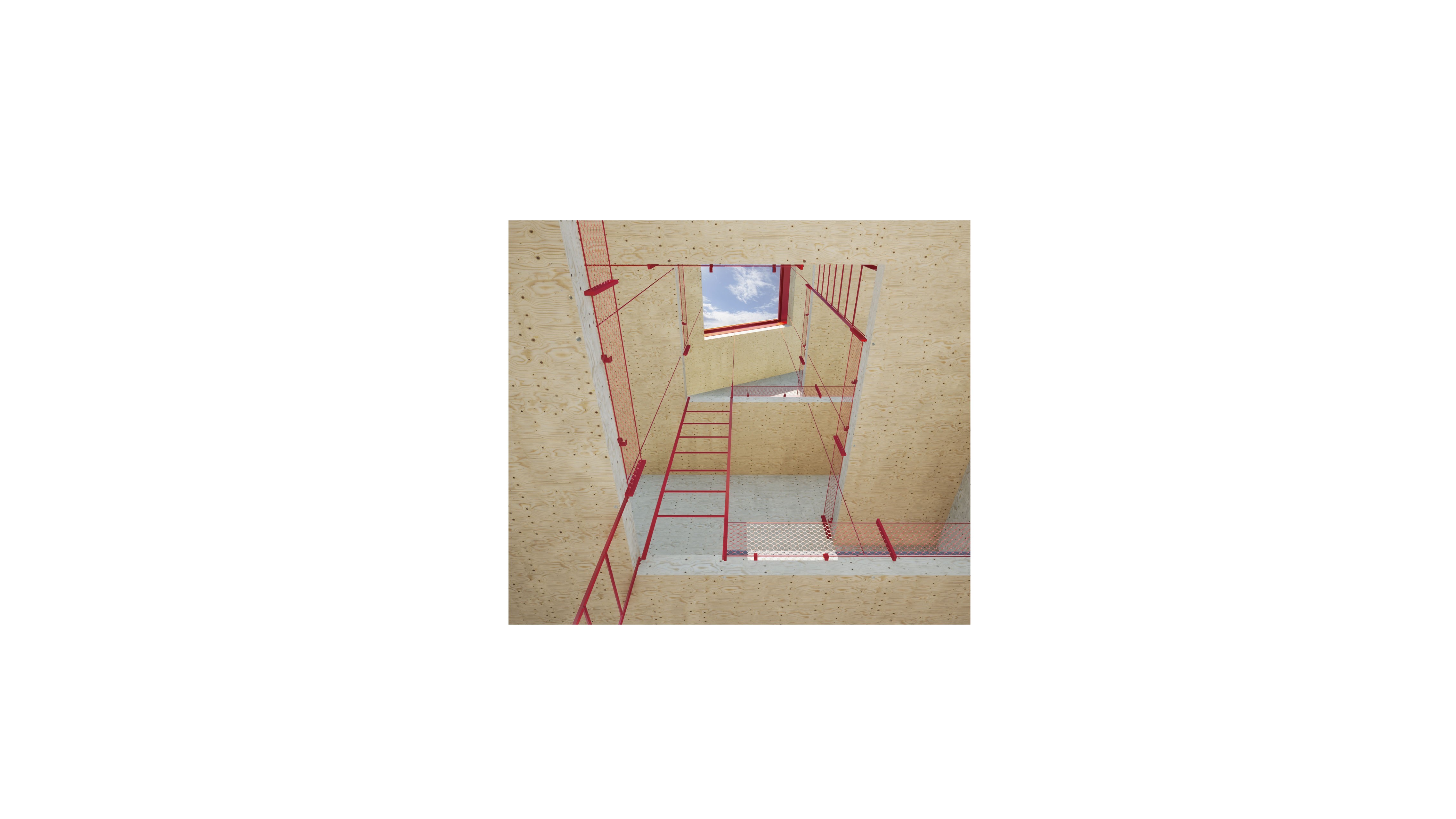
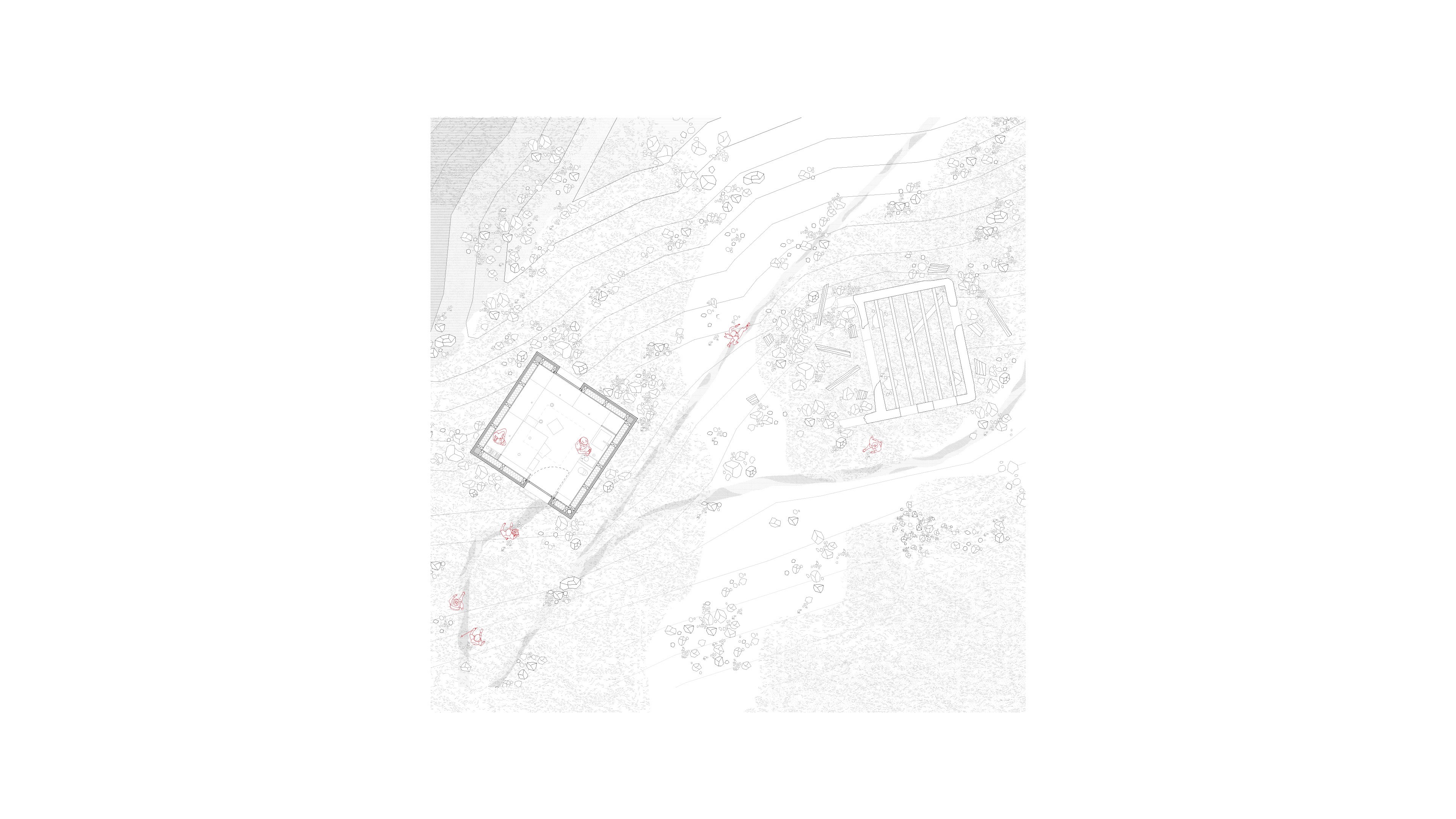
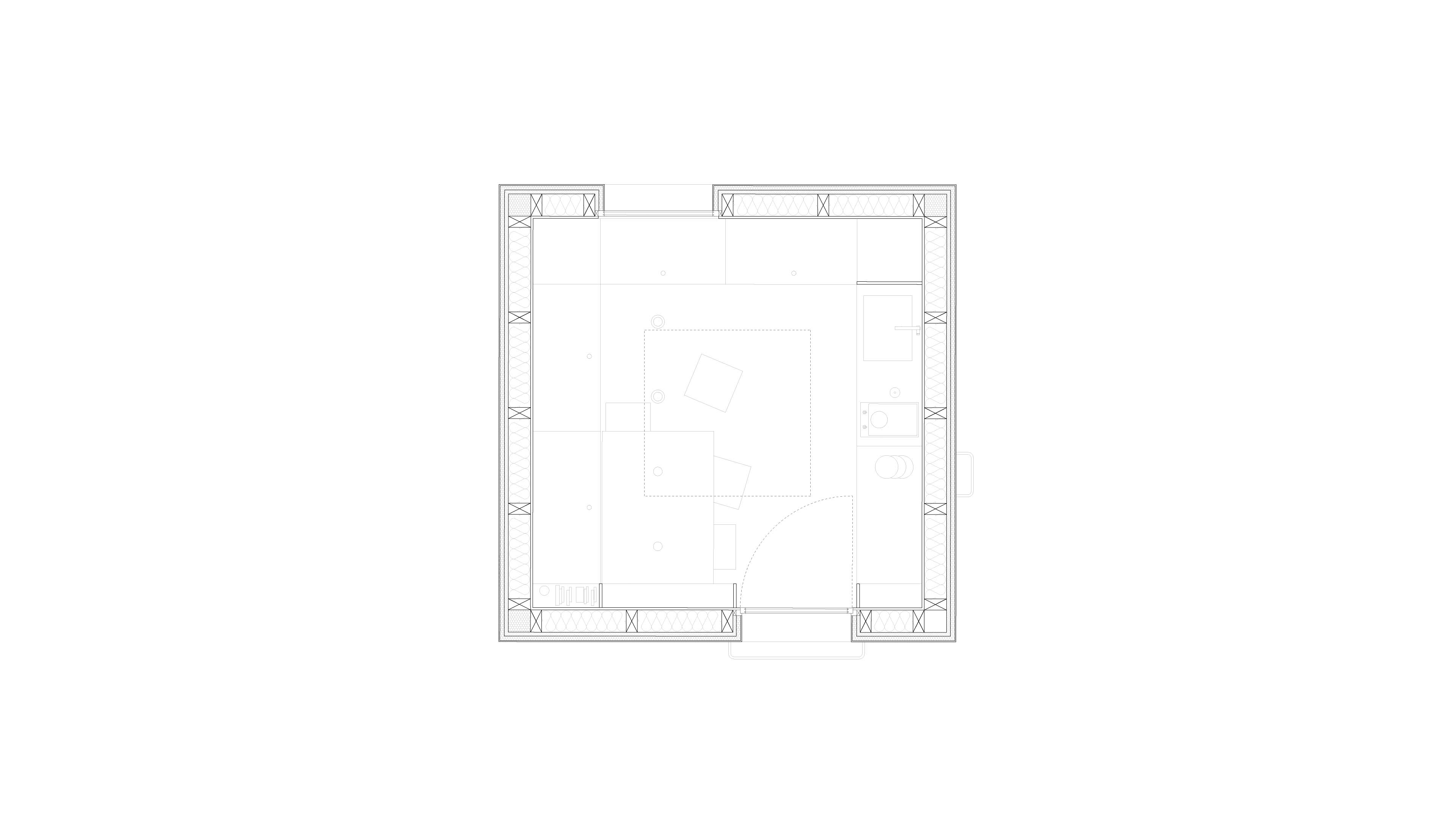
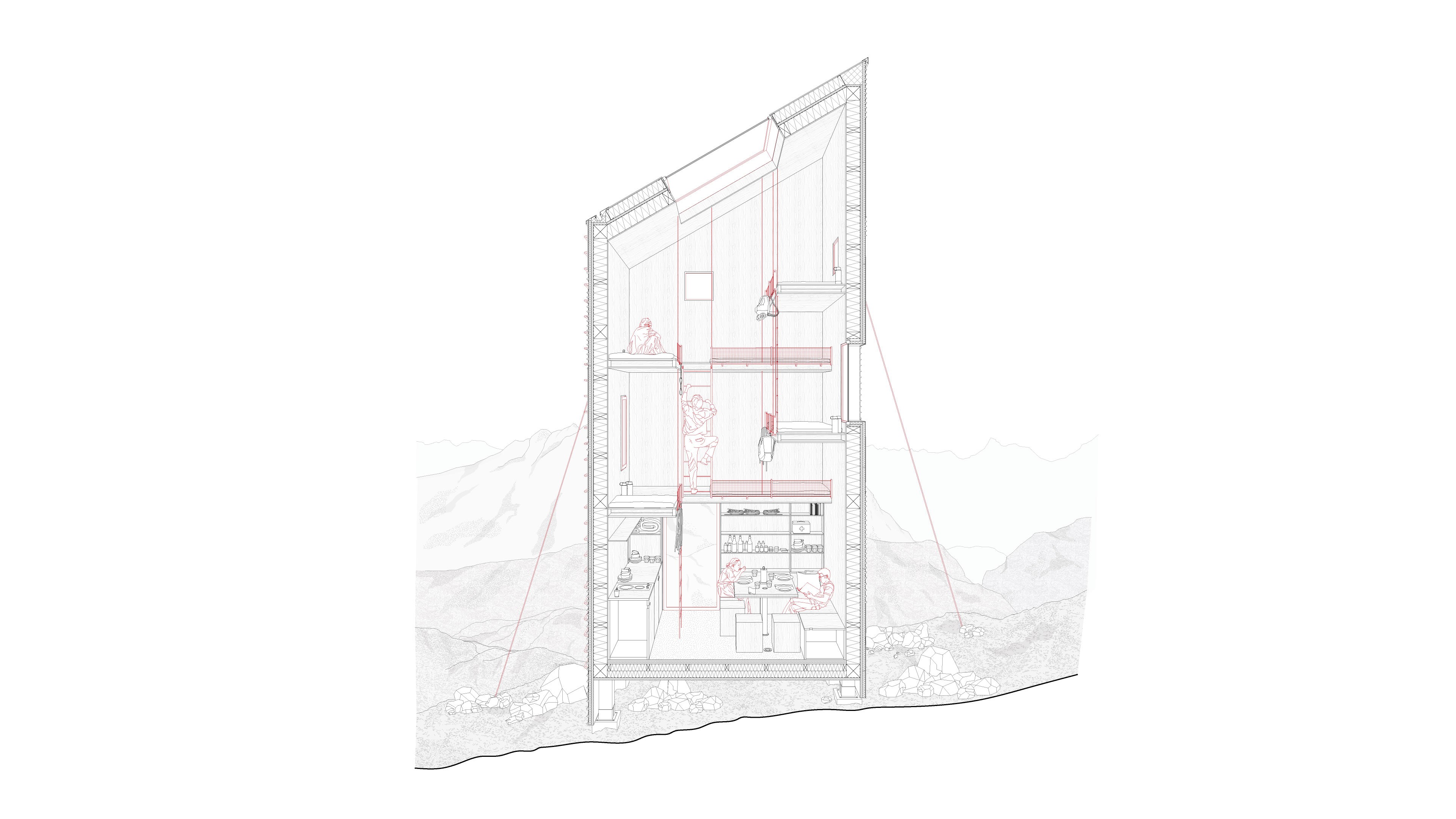
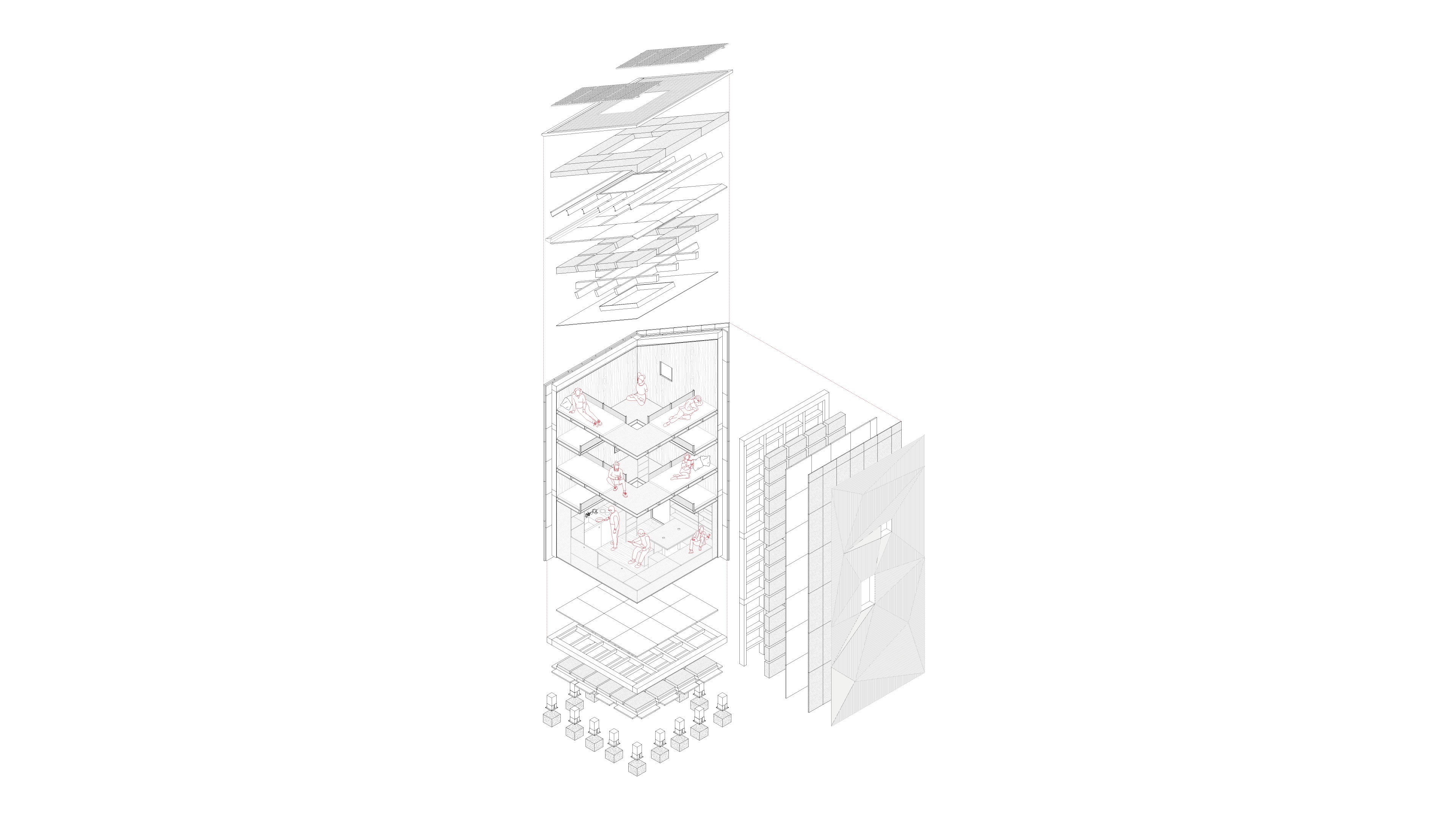
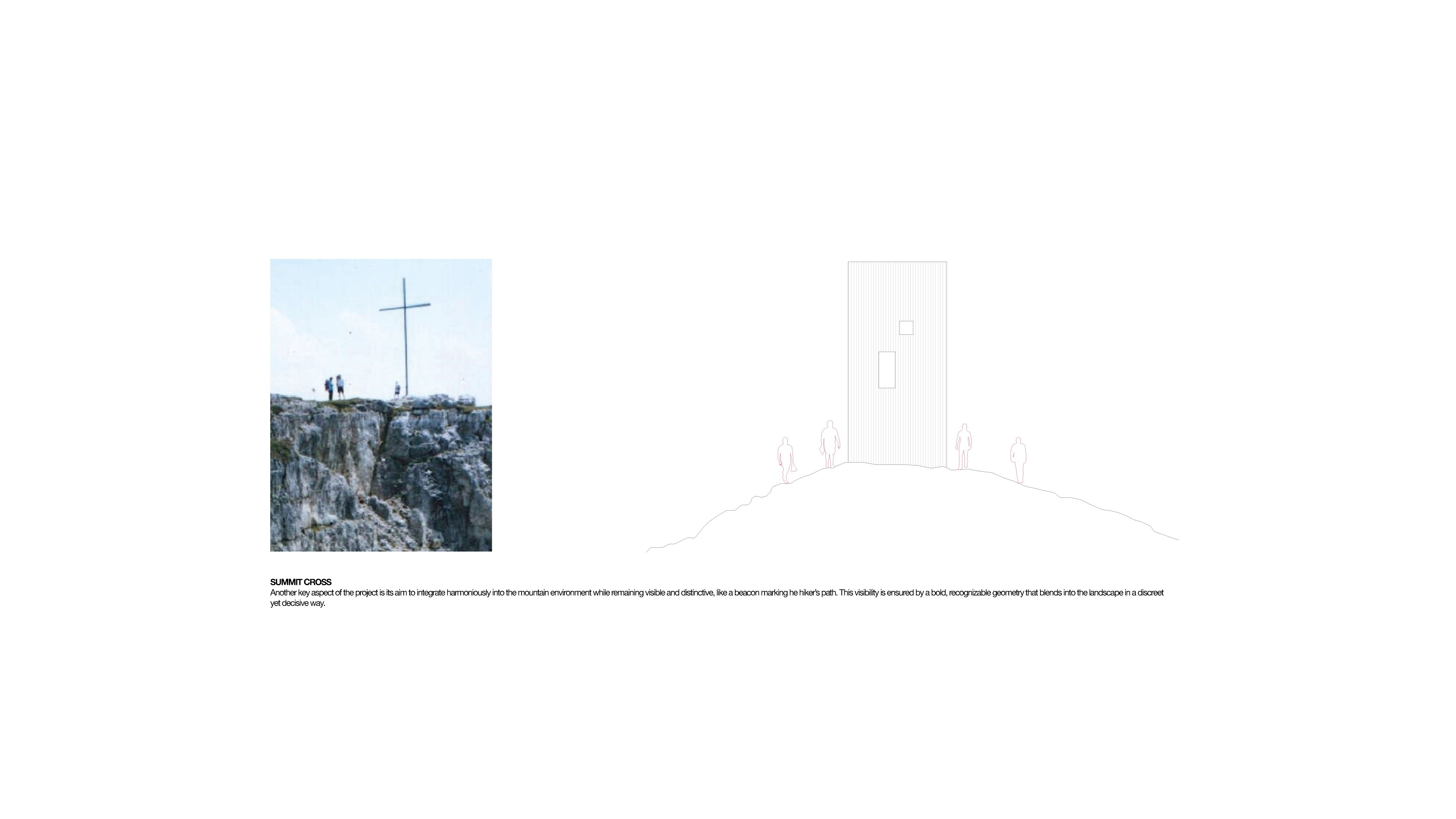
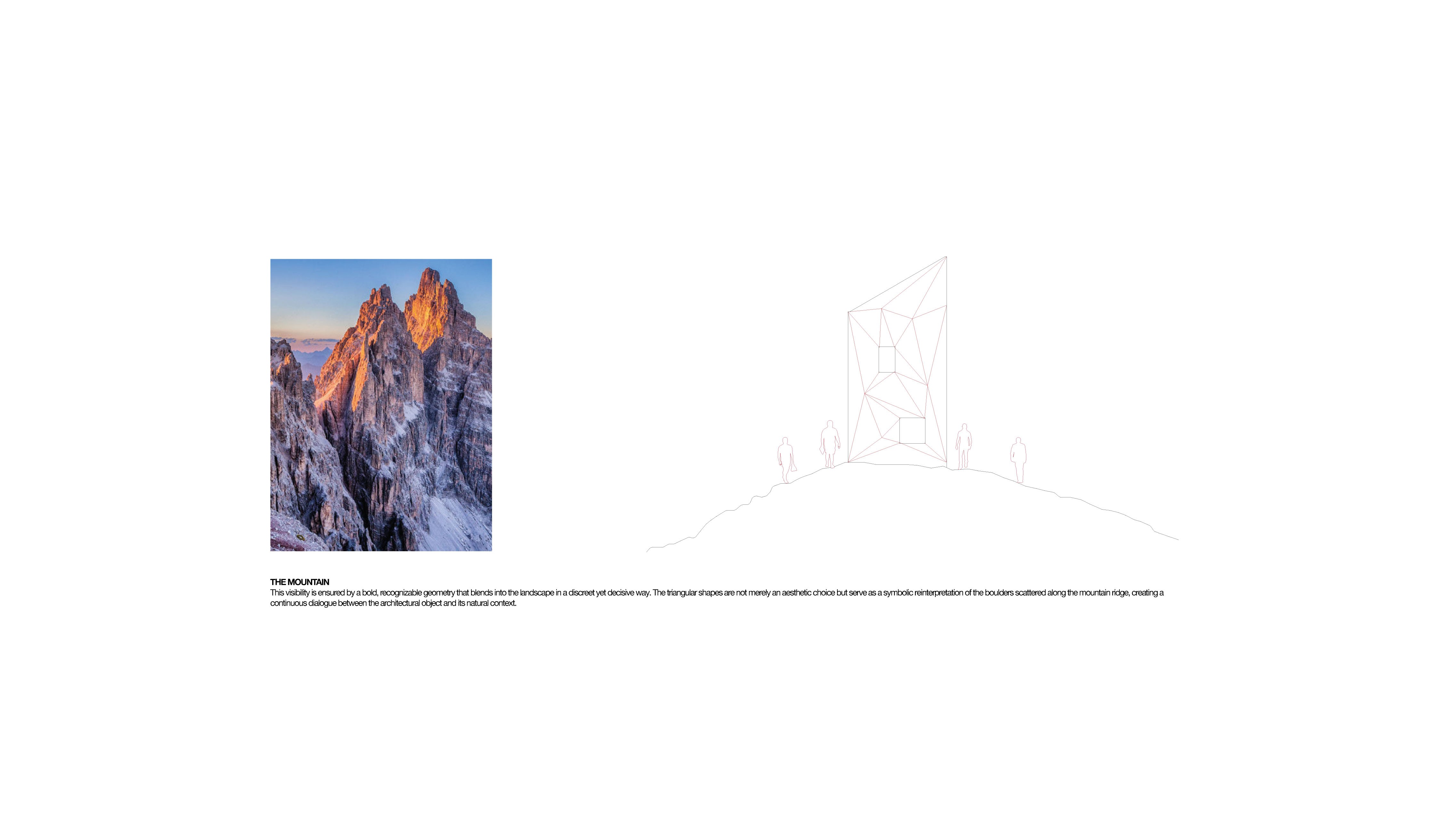
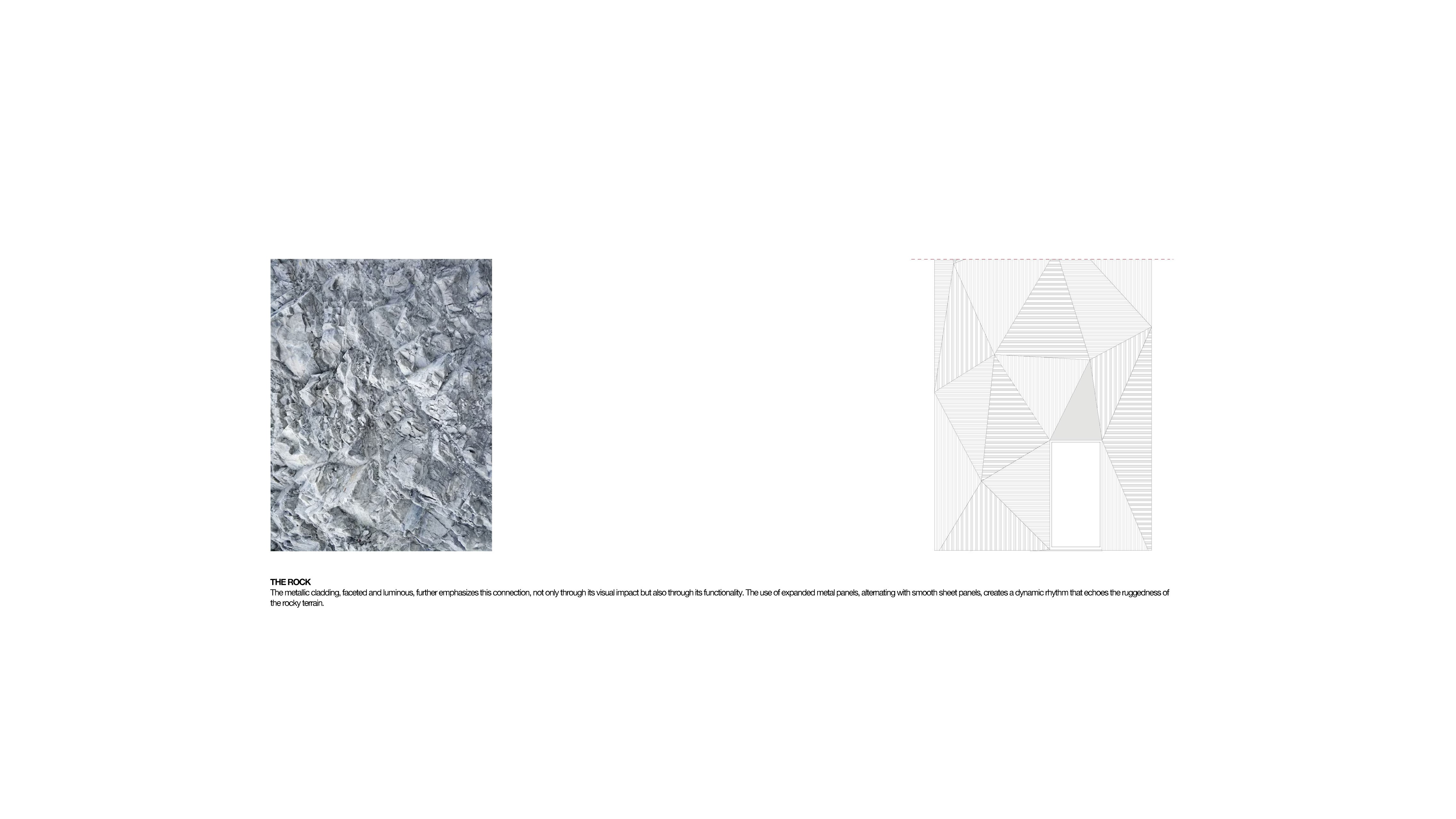
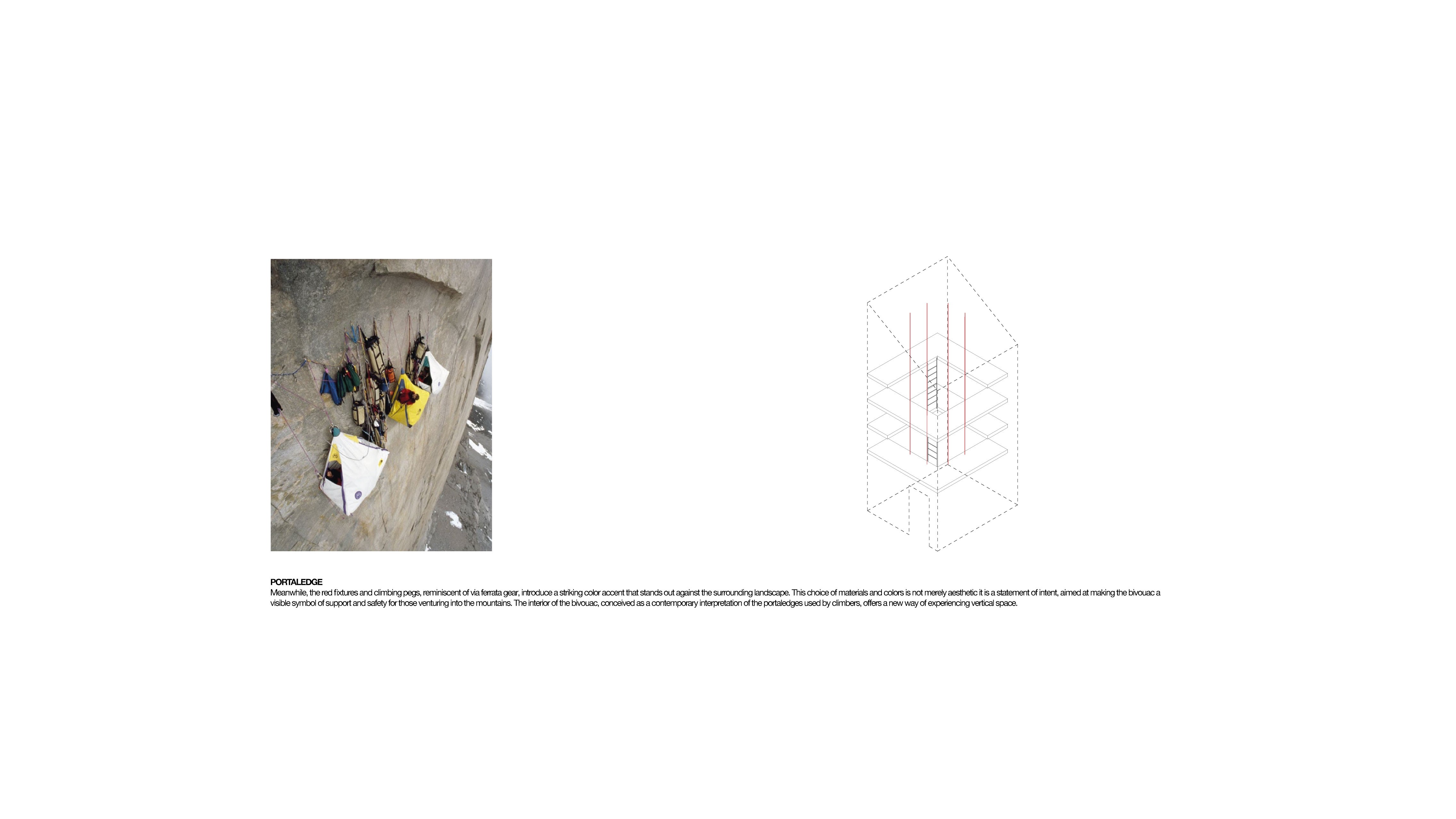
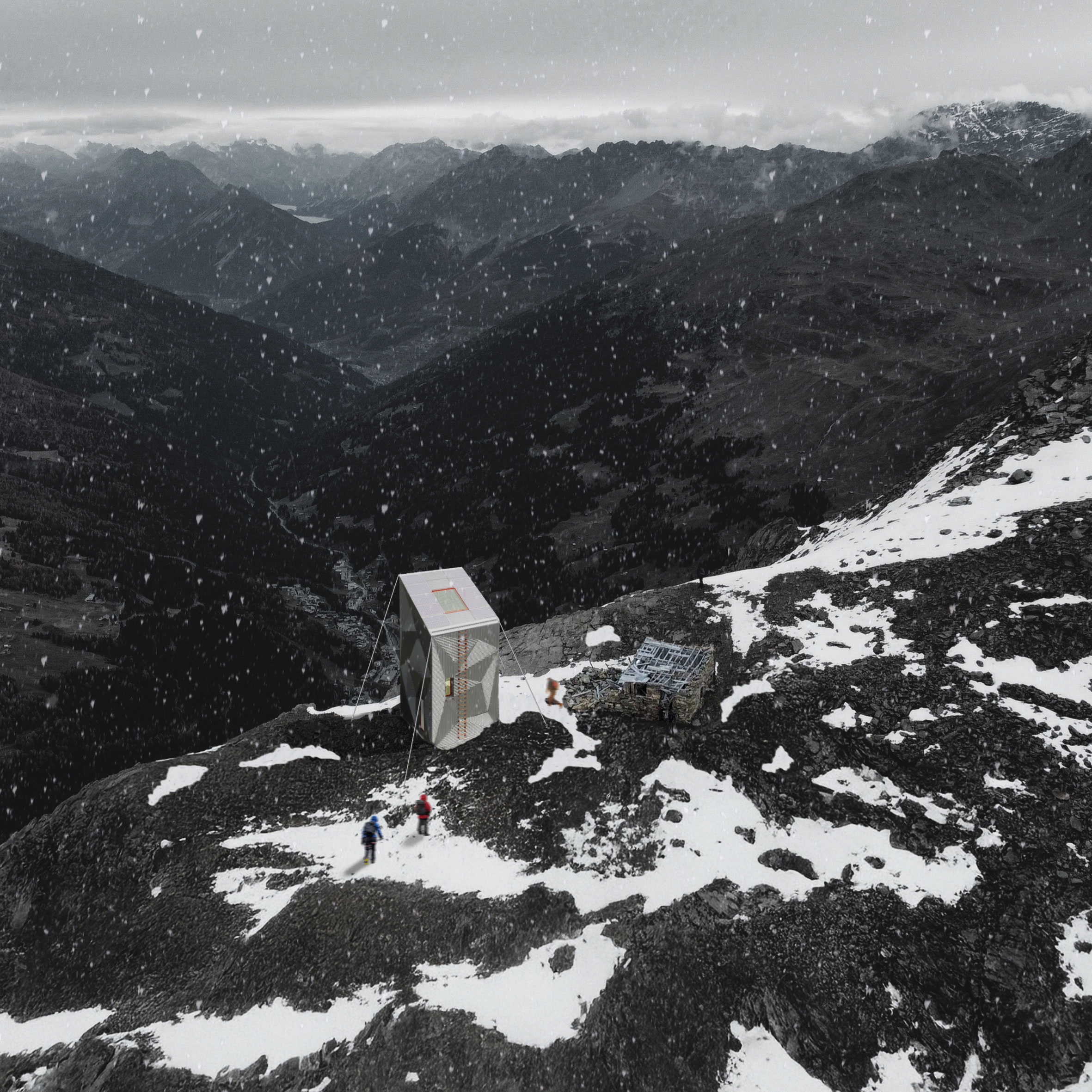
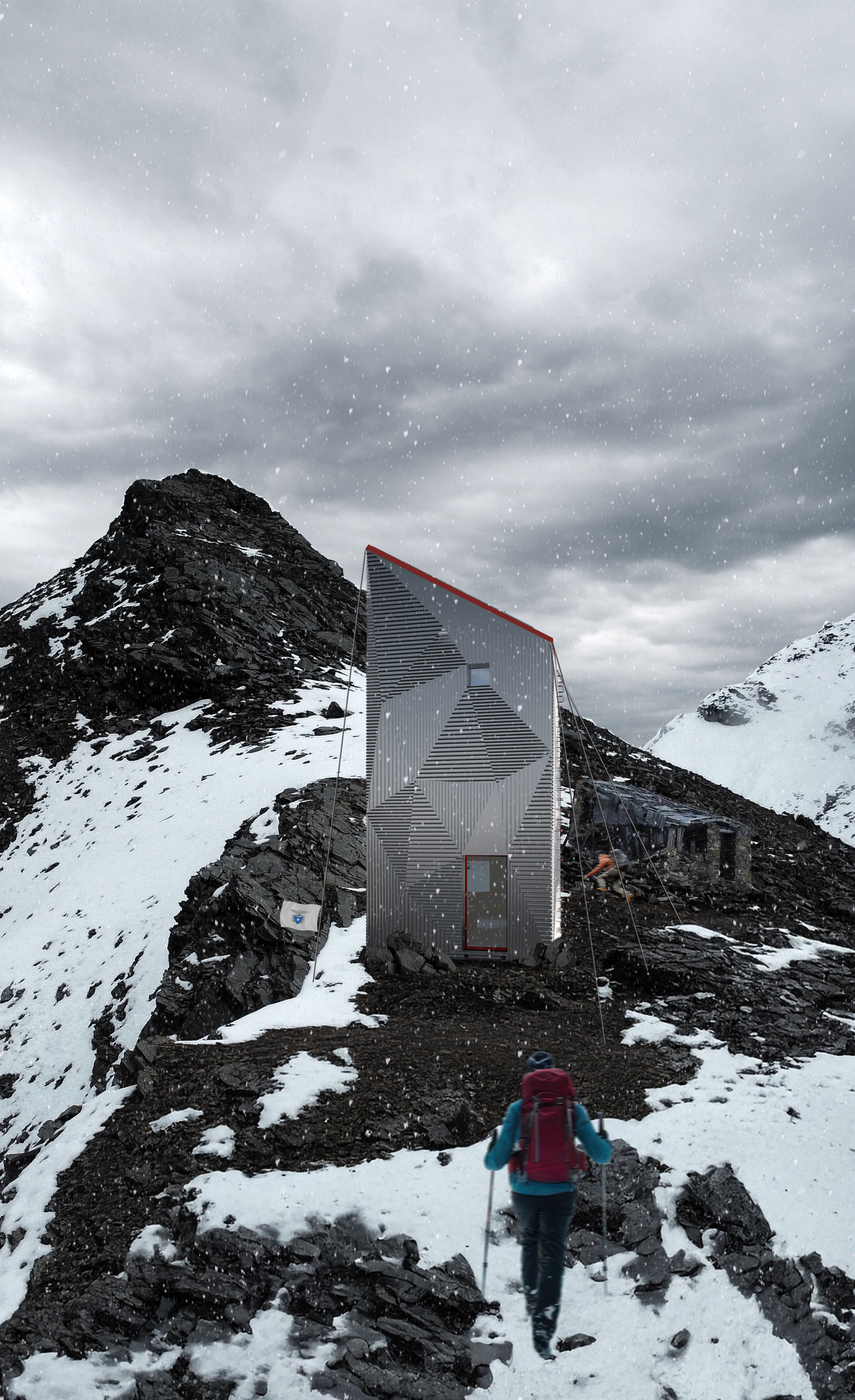
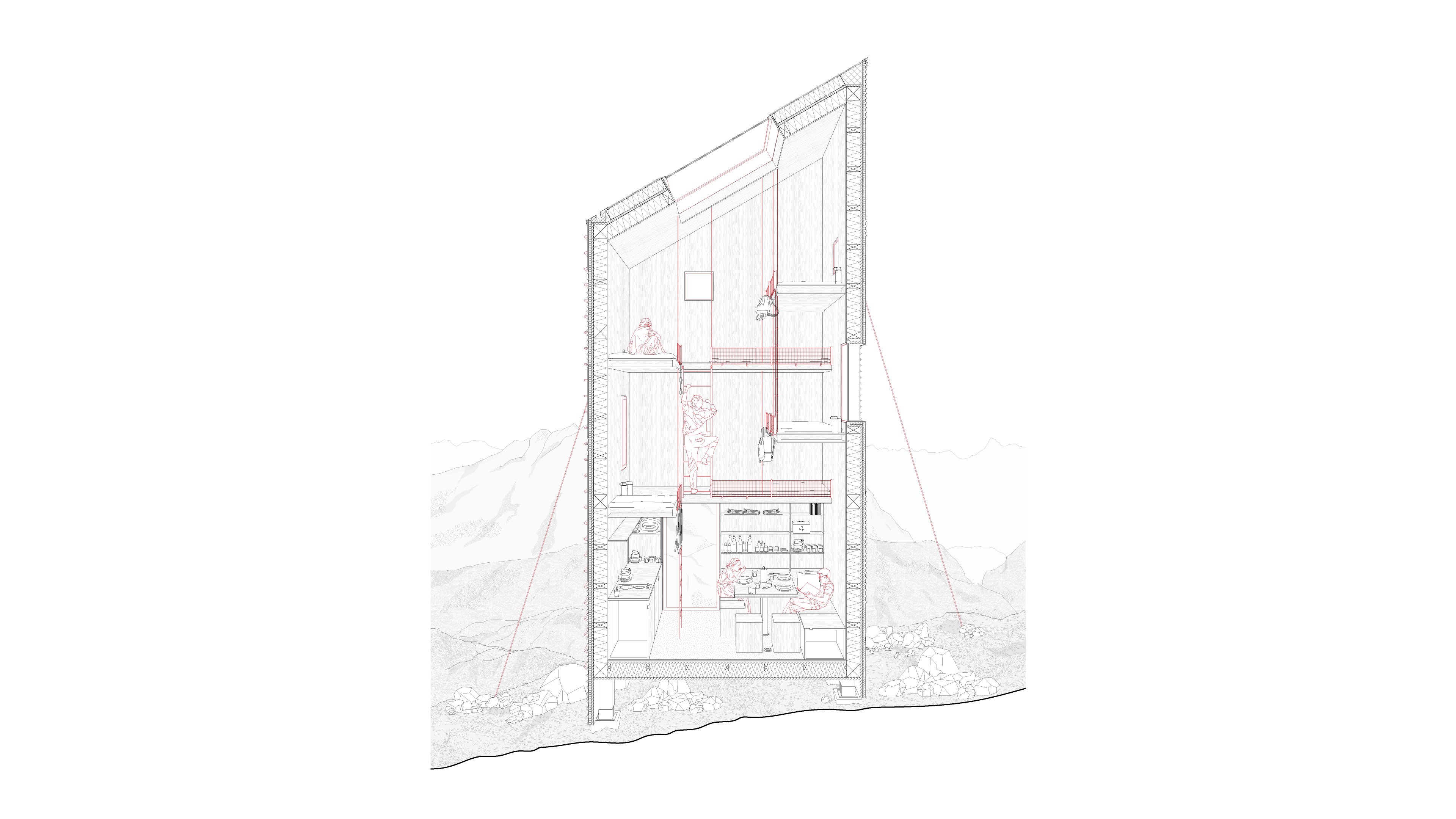
The project proposes an alternative to the traditional horizontal layout of mountain bivouacs, suggesting instead a vertical configuration in which full spatial perception becomes the unifying element of the hikers’ experience. Starting from these premises, the design defines a structure with a bold character, aiming to establish a recognizable landmark visible both during the ascent and from the valley by reinterpreting the symbolic presence of summit crosses. Externally, the structure appears as a compact and sculpted volume, marked by triangular surfaces that evoke the fragmentation and massing of the boulders typical of the local landscape. The perceived image is that of a monolith emerging from the ridgeline, balanced between mimicry and distinctiveness: geometrically homogeneous, yet differentiated through materials and colors. The faceted metal cladding combines expanded metal panels offered in different mesh sizes and orientations with smooth sheet metal panels. Red painted steel frames and climbing pegs are embedded into the surfaces, offering a visual reference to via ferratas and high altitude rescue equipment. The interior space reinterprets certain principles typical of the mountaineering world. Inspired by portaledges, the vertical organization of the volume features a habitable tower, within which suspended slabs host the sleeping platforms. These bunks are anchored with tension cables to the roof and face a full height central void. Each bunk is accessible from the ground floor via retractable ladders, which can be pulled up to free up space and increase flexibility. The platforms are arranged in a staggered L shaped pattern along the vertical axis, creating a layered composition that supports both intimate spaces and a central, communal core. This layout shapes an internal light well, emphasized by the skylight at the top, around which the sleeping areas are arranged symbolically recalling a campfire, decomposed into five vertical layers: a common area at ground level and four overlapping levels of bunks. The ground floor perimeter walls contain built in storage, fixed seating, and compartments for gear, while fold away furniture and surfaces allow the space to be adapted to the varying needs of its users. The interior is entirely clad in larch wood panels to ensure material uniformity, from which red painted metal elements such as railings, windows, ladders, and tension cables emerge in contrast. At the first landing, an emergency exit has been placed, accessible from the outside via a steel ladder that reaches the roof, allowing for maintenance operations. From a construction standpoint, the structure is made with a timber “balloon frame” system, divided into three prefabricated, transportable sections, which are assembled on site and then clad. A series of concrete footings form the foundations, above which the timber structure is raised 50 cm from the ground for hygrothermal reasons. The project also includes a renewable resource collection and utilization system, with a roof designed for solar panel installation and equipped with gutters and channels for rainwater harvesting and recycling.